On 8 May 1944, a child was born in Sophiatown. The apartheid state would spend the next three decades trying to unmake everything that child became. It failed.
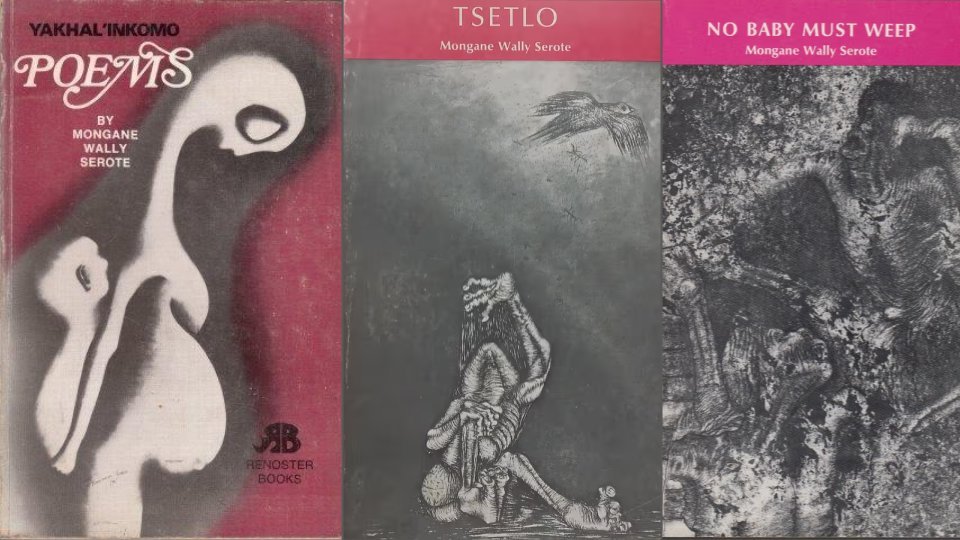
Mongane Wally Serote turned eighty-two on Friday, 8 May. He is a National Poet Laureate, a decorated liberation activist, and the author of a body of work that has outlasted every political arrangement that tried to silence it. Those who have served inside the post-1994 institutions of democratic South Africa understand that record as something more than biographical honour. It is a standing demand. Serote’s poetry does not commemorate. It interrogates. It interrogates precisely the institutions in which his own democratic service unfolded, and in which many of us who came after him have occupied positions of responsibility. The full weight of that interrogation lands differently when one understands what was done to the place that formed him, what was done to him directly, and why none of it accomplished what it was designed to accomplish.
Sophiatown was not simply the suburb of his birth. It was an argument against apartheid’s central premise, and it had been making that argument for years before the apartheid state had assembled the full machinery to answer it.
By the time Serote was born, Sophiatown had been a hub of Black urban life for more than three decades. It occupied a peculiar legal position in the geography of racial capitalism: it was one of the few places in Johannesburg where Africans could own property under freehold title, a loophole that would later be weaponised by the same state that cited it as evidence of the area’s “threat” to adjacent white suburbs.
The loophole produced something the architects of racial capitalism had not calculated: evidence. In a country being systematically organised around the premise that Black cultural life was peripheral, provisional, and unworthy of investment, Sophiatown produced a culture that refuted every one of those premises in plain sight. The shebeens (informal taverns) along Good Street and Tucker Street functioned as rehearsal rooms and literary salons simultaneously. Drum magazine, launched in 1951, anchored a generation of writers (Can Themba, Nat Nakasa, Bloke Modisane, Lewis Nkosi) and turned Sophiatown into Africa’s answer to the Harlem Renaissance of the 1920s. Jazz rang through the same streets: Hugh Masekela, who attended St. Peter’s Secondary School in Sophiatown, made his decision to become a trumpet player in the suburb’s Harlem Cinema; Miriam Makeba built her first audiences in its shebeens; Todd Matshikiza chronicled the scene in his jazz column and later composed the music for King Kong (1958), South Africa’s first blockbuster theatrical production. Literature, photography, music, political organising: the suburb was doing all of this at once, in overcrowded houses on streets that the apartheid planners would soon declare a slum requiring clearance.
Precision matters here. The apartheid state did not call Sophiatown a slum because it was a slum. It called Sophiatown a slum because it needed a respectable word for what it intended to do. The actual reason was simpler and more brutal: a multiracial, culturally productive, property-owning Black urban community was incompatible with the ideology of white supremacy. Sophiatown had to be destroyed not because of what it lacked, but because of what it was.
The legal instrument was the Group Areas Act, No. 41 of 1950, passed by the National Party government of D.F. Malan in the first wave of apartheid legislation. The Act empowered the state to designate separate residential and business areas along racial lines and to forcibly remove anyone residing in an area not designated for their racial classification. Sophiatown, geographically adjacent to the white suburbs of Westdene and Newlands, was declared a White Group Area.
The ANC’s Western Areas Campaign, led by Robert Resha, organised resistance. The slogan was “Ons dak nie, ons phola hie” (“We will not move, we stay here”). Residents pledged non-compliance. Father Trevor Huddleston, the Anglican priest of the Church of Christ the King in Sophiatown, campaigned publicly, internationally, and without diplomatic restraint. His 1956 account, Naught for Your Comfort, remains one of the primary records of what was lost and what was witnessed.
It did not matter. On 9 February 1955, at four in the morning, two thousand police officers surrounded Sophiatown. By sunrise, military trucks were loading families and their possessions and dispatching them to a treeless, waterless stretch of veld called Meadowlands, absorbed into what became Soweto. The operation had been planned for two years. By 1960, the last residents had been removed: some sixty thousand people in total displaced from the suburb.
The apartheid state then renamed what remained. It chose the name Triomf — “Triumph” in Afrikaans. This was not a clerical or administrative decision. Naming the site of a community’s destruction Triumph was a declaration addressed not only to the former residents of Sophiatown but to every Black South African who had watched. The message was legible: we can erase you from the map, erase your name, and record our satisfaction in doing so.
Mongane Wally Serote was eleven years old when the removals began. He grew up in the aftermath of that erasure.
Politicians learn quickly that the state’s most persistent failure is its belief in the finality of force. What Serote’s detention in 1969 demonstrates, and what his emergence from it into Yakhal’inkomo makes irrefutable — is that consciousness, once sharpened to a sufficient degree, cannot be held in a cell.
The state’s second attempt to silence him came in 1969. Serote was twenty-five years old, already writing, already part of the intellectual and cultural current that the Black Consciousness Movement was building through the South African Students Organisation (SASO), founded in 1968 under the leadership of Steve Biko. Black Consciousness offered a philosophical inversion of apartheid’s central mechanism: rather than accepting the colonial definition of Blackness as absence and deficiency, it insisted on Black consciousness as a source of political and cultural authority. Serote absorbed this framework and was in the process of translating it into verse.
The Security Branch of the South African Police detained him under Section 6 of the Terrorism Act, No. 83 of 1967. He was held for nine months without trial, without charge, without access to legal counsel. He was never prosecuted. There was no prosecutable case. The nine months in solitary confinement was itself the punishment.
He emerged from detention and wrote Yakhal’inkomo.
Published in 1972, the collection announced a voice of extraordinary power: one that the South African literary establishment immediately recognised, awarding it the Ingrid Jonker Prize for debut poetry. The title requires precise philosophical attention. Drawn from isiZulu, yakhal’inkomo means “the cry of cattle at the slaughterhouse.” What matters about that image is its specific epistemological position: the cattle at the slaughterhouse do not cry from ignorance. They cry because they know. Yakhal’inkomo is the sound of full consciousness in the face of organised violence. It is the cry that knows.
His poem “Alexandra” opened the collection’s most arresting register:
Alexandra,/ I love you;/ I know/ when all is said/ all has not been said
The capacity to hold love and devastation in a single syntax — to refuse the choice between tenderness and rage, to address a township defined by poverty and state violence and say, plainly, I love you — was not merely a stylistic achievement. It was political evidence. The state’s violence had not succeeded in reducing Serote’s consciousness to bitterness or despair. The complexity of the poem was itself proof of the cell’s failure.
Serote left South Africa in 1974, awarded a Fulbright Scholarship to study at Columbia University in New York, where he completed his Master of Fine Arts degree in 1979. He did not return to South Africa after completing his studies. Instead, he moved to Gaborone, Botswana, where he founded the Medu Art Ensemble, a multiracial, Pan-African collective that became one of the central cultural structures of the ANC’s resistance in exile. He eventually served as Head of the ANC’s Department of Arts and Culture in the years leading to the democratic transition.
The details matter: a man the apartheid state had imprisoned without charge was, within three years of his release, studying creative writing at one of the most prestigious universities in the world. The distance between those two facts measures something important about what the apartheid state fundamentally failed to understand about the people it was trying to contain.
He was part of a generation of South African writers in exile (Bessie Head, Alex La Guma, Miriam Tlali among them), who sustained the cultural conversation of liberation across borders and decades, building a literature in the spaces between the borders that were designed to contain them.
Serote returned to South Africa in 1990 following the unbanning of the ANC. He was elected to the first democratic Parliament in 1994 and served as Chairperson of the Portfolio Committee on Arts and Culture: one of the committees charged with deciding what the new democracy would do with its inheritance of cultural erasure and exile. The irony was not lost on those who served in that Parliament: the man tasked with helping build a democratic cultural architecture was the same man the previous state had jailed for nine months without charge for writing poetry. In 2007, he was awarded the Order of Ikhamanga in Silver in recognition of his “excellent contribution to literature, with emphasis on poetry, and for putting his artistic talents at the service of democracy in South Africa.” In November 2018, he was inaugurated as South Africa’s National Poet Laureate.
The body of work spans more than five decades: No Baby Must Weep (1975), Behold Mama, Flowers (1978), the novel To Every Birth Its Blood (1981), Third World Express (1992), Freedom Lament and Song (1997), and much more. It is a literature that has aged without losing its urgency: which is the only reliable test of whether a writer has done something genuinely necessary.
The apartheid state forcibly removed approximately 3.5 million people under the Group Areas Act and related legislation between 1960 and 1983, in what the Surplus People Project documented as one of the largest mass removals of people in modern history. Sophiatown was one node in a project of dispossession that was continental in its logic, even when localised in its execution. The name Triomf stood until after 1994; the area was restored to the name Sophiatown following the democratic transition.
But renaming is not restitution. The residents displaced between 1955 and 1960 lost property held under freehold title: the very form of property that the apartheid state had, in its early years, permitted and then used against those who held it. Their descendants carry that dispossession in the continuing inequalities of South African land ownership and urban geography. The land question in South Africa cannot be honestly examined without Sophiatown. The Group Areas Act did not simply move people; it stripped away an asset base that Black freehold property represented, and that stripping has not been adequately answered.
Serote’s poetry insists that this accounting remains open. His work is not a monument to what was survived. It is a ledger of what remains unfinished. The cattle at the slaughterhouse cry not in surrender but in consciousness. And consciousness of loss, as the poem teaches, is not the same as the acceptance of loss. It is the beginning of the reckoning that justice requires.
Eighty-two years ago, a child was born in a suburb the apartheid state had already decided to destroy. The state destroyed the suburb. The child survived, spent nine months in a cell without charge, went into exile, built a cultural movement, wrote some of the most significant poetry Africa has produced, came home, served in Parliament, and was ultimately recognised as his country’s National Poet Laureate.
The apartheid state built Triomf on the rubble of Sophiatown. Wally Serote built a literature that has outlasted every name that was imposed on what was taken from him.
In his poem, Introit, he wrote:
I have lain on my back
flat like a long dead reptile
I lie here while my load clutches my heart like a frightened child
And the horrors of my stomach throb to my eyes
I am a black manchild
I am he who has defeated defeat
I am a surprise which surprises me…
Though a reflection about the brutal, dehumanising reality of life under apartheid in South Africa, Serote here was expressing his raw, visceral disgust about the systematic dehumanisation of his people by the system of white tyranny.
He showed deep understanding of the fact that apartheid could not be reformed but had to be destroyed. The rebirth of our nation had only to come through immense sacrifice as the only solution to a system that was so blatantly violent, so grossly vile, that the entire world declared it “a crime against humanity”.
The cruelty with which black populations of Sophiatown, District Six and other areas were uprooted from their homes, their communities destroyed and lives, at a whoof, changed, was a clear demonstration of the extent of utter disregard for black lives by the white minority regime.
To call for a violent response to this, on his part as well as for millions that opposed this system, was not a veneration of violence and blood-letting, a disregard for human life, but was a powerful moment of realisation of the extent to which the oppressed had to go to reaffirm their humanity and restore their own dignity.
Poets, musicians, cultural activists of all sorts, and even sports people, had to pick the cudgels of the struggle, in whichever way they could, through their pens, voices and boots, to join the titanic effort to rid our country and Continent of a monstrosity.
Nobody could, and would, be spared in the fight, the soldier in the trenches of exile, the poet and musician in front of the mic, the sportsperson enduring sports boycott and the cultural activist in the theatres of the world and of apartheid South Africa itself.
In this sense, Serote was not just calling for the death of the oppressor, but for the death of the version of himself that was shaped and diminished by oppression.
In his Pedagogy of the Oppressed, Paulo Freire writes:
“Concern for humanisation and dehumanisation leads at once to the recognition of dehumanisation, not only as an ontological possibility but as an historical reality. And as an individual perceives the extent of dehumanisation, he or she may ask if humanisation is a viable possibility.”
Freire continues:
“But while both humanisation and dehumanisation are real alternatives, only the first is the people’s vocation. This vocation is constantly negated, yet it is affirmed by that very negation. It is thwarted by injustice, exploitation, oppression, and the violence of the oppressors; it is affirmed by the yearning of the oppressed for freedom and justice, and by their struggle to recover their lost humanity.”
To choose to rise up and fight against injustice, exploitation, oppression, and the violence of the oppressors — to choose to negate your negation, to fight to affirm your humanisation against the dehumanisation to which the oppressor subjects you, is to violently kill your old self who was still, perhaps, shocked at your oppression and was thus shaped and diminished by it.
Through Introit, Serote called for the violent self-creation of a people who had reached the limit of human endurance and decided to become their own instrument of deliverance.
He remains, and stands, undefeated.
Marking his birthday with anything less than accountability to what his work demands would be to miss its point entirely, and those of us who have served in the institutions his poetry is interrogating have the least excuse for doing so. The poetry does not offer comfort. It offers clarity. And clarity, for those willing to receive it, is far more useful.
All has not yet been said.
“The future is not an accident.”
Dr Malusi Gigaba is a Scholar-Statesman, an ANC NEC Member, a former Cabinet Minister of the Republic of South Africa, a Member of Parliament, and a member of both the Joint Standing Committee on Defence and the Portfolio Committee on Trade, Industry and Competition.