This week marks the 114th anniversary of the ANC.
This milestone is not a ceremonial number. It is evidence that an African political movement can endure repression, exile, prison, banning, internal contestation, and generational change – then still find its way back into the arena.
If the ANC is to exist for another 114 years, renewal cannot be a slogan. It must be a programme with teeth, grounded in the country's real pressures – collapsing trust in institutions, uneven state capacity, social fragmentation, and a political economy that still locks too many young South Africans outside the gates of earning, ownership, and enterprise.
The record is clear on one point. The ANC has never survived without the youth playing a central role.
Youth convened the beginning, youth built the method
In 1912, the founding conference was organised by people who were young by any modern measure. Pixley ka Isaka Seme was about 30. Alfred Mangena about 32–33. Richard Msimang about 27–28. George Montsioa about 26–27. The ANC's first act was not only unity. It was youth-driven institution-building.
That pattern repeats.
In the 1940s, a new cohort entered the ANC and reshaped its operating logic. Walter Sisulu joined the ANC in 1940 at 28. In 1944 the ANC Youth League was formed, with a generation that insisted on mass action, not polite appeals. That shift later expressed itself through the Programme of Action, then through disciplined mobilisation mechanics.
1952: Defiance turned resistance into mass politics – Mandela was 33
The Defiance Campaign mattered because it moved resistance from petitions into disciplined, coordinated civil disobedience against apartheid laws, and it did so at a scale that shifted South African politics at the time. It showed that mass politics could be organised, sustained, and principled – even under a state determined to crush dissent.
Nelson Mandela served as Volunteer-in-Chief, responsible for the campaign's volunteer corps and operational discipline. He was 33 when the campaign began.
1943: A structural expansion that made endurance possible
In 1943, the ANC decided to admit women as full members. That shift widened organisational depth and strengthened the leadership pipeline.
Two figures help anchor what that meant in practice. Charlotte Maxeke laid important groundwork through women's organisation and political mobilisation long before the ANC admission policy change. Sadly, she passed away in 1939 at the age of 65, 4 years before the change of policy came into effect. Madie Hall-Xuma - the first President of the ANC Women's League - was 49 years old in 1943. She is credited for strengthening women's institutional presence through the Women's League in the 1940s, helping to entrench women's participation inside the movement's formal structures.
A movement that narrows its membership eventually narrows its future.
1955 gave the struggle a constitutional imagination
At Kliptown in 1955, the Congress of the People included women, youth and students, and adopted the Freedom Charter. Youth, in other words, was not only supplying feet for marches. It was present in the values debate and in the language of a future society.
1960: Banning, exile, and Oliver Tambo's steady hand
In April 1960 the ANC was banned. Survival became practical, not poetic. Cadres had to sustain networks, communications, discipline, political education, funding, and international support.
This is where Oliver Tambo must be named plainly. When the ANC was banned on 8 April 1960, Tambo was 42. Keeping a movement alive in exile under constant strain is not a normal leadership assignment. It requires steadiness, persuasion, sacrifice, and a capacity to hold people together when fear and fatigue are doing their work.
Few leaders anywhere have had to keep an organisation coherent for so long under such conditions.
1976 proved youth could shake the system, even outside party lines
The Soweto Uprising was organised through student formations aligned to Black Consciousness, with leaders like Tsietsi Mashinini. The ANC was not the internal driver of the first spark. That does not weaken the liberation story. It strengthens it, because it shows how youth activism can erupt, organise, and force the country to confront itself.
After 1976, many young people left the country and strengthened the struggle in exile, including swelling the ranks of MK. A youth uprising became a national turning point that changed capacity and urgency across the liberation ecosystem.
The 1980s: UDF renewal lessons – youth did not found it, youth powered its vibrancy
The UDF was not founded as a youth initiative, and its national leadership included older stalwarts. Yet the movement's vibrancy, reach, and campaigning energy were repeatedly driven by youth and student formations.
Structures such as COSAS helped build regional UDF organisation and pushed mass campaigns through boycotts, community mobilisation, and local activism. The UDF's broad-front approach created space where youth energy could be turned into sustained pressure, with civic discipline and organisational reach.
1990 opened the door, it did not finish the work
When the ANC was unbanned in 1990, it returned because it had survived. Survival was not luck. It was renewal across generations, with youth repeatedly doing the practical work of organisation.
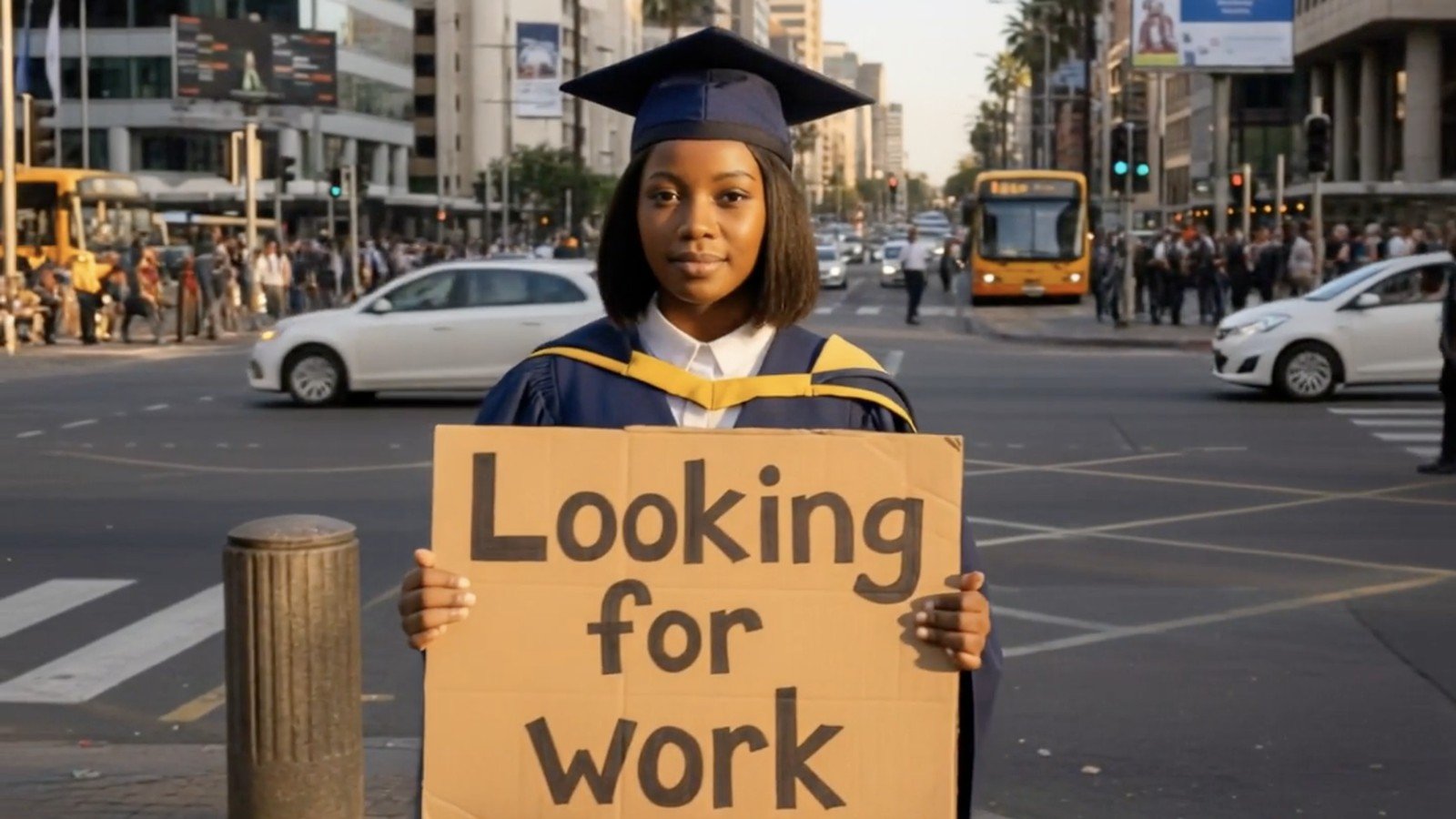
That history matters because South Africa's main struggle today is not a pass law. It is youth economic agency.
Youth economic agency is about more than job counts. It includes earning pathways, enterprise formation, access to markets, participation in value chains, entry into procurement that is fair and functional, and the ability to build assets over time.
If we accept that the future is not an accident, then youth economic agency must be treated as a design problem that demands political will and economic imagination.
Start with what can be done, measured, and enforced:
- The education-to-work bridge needs hard wiring through apprenticeships, artisan pathways, workplace-based learning, and credible placement partnerships.
- Township and rural entrepreneurs need finance that reflects reality, along with routes into markets that are not controlled by gatekeepers.
- Procurement reform must create access to real supply chains, backed by quality standards, delivery discipline, and consequences for corruption.
- Infrastructure investment should be structured to grow local suppliers and local capability, instead of importing value and exporting opportunity.
The recent ANCYL Congress is a reminder that youth politics remains consequential. The deeper test is whether the movement will make space for young people to influence the economic agenda with seriousness, discipline, and a public service ethic.
The youth sustained the ANC when it was banned, hunted, and pushed into exile. The youth can sustain South Africa's future, but only if the political economy stops treating them as an audience and starts treating them as builders.
The future is not an accident. It is an outcome.
“The future is not an accident.”
Dr Malusi Gigaba is a Scholar-Statesman, an ANC NEC Member, a former Cabinet Minister of the Republic of South Africa, a Member of Parliament, and a member of both the Joint Standing Committee on Defence and the Portfolio Committee on Trade, Industry and Competition.