
Introduction
On 22 October, writing about President Joaquim Chissano, I made a promise in public: “I plan to dedicate a full article to the Ibrahim Index of African Governance and its impact on the African continent soon.” This is that article.
I have not written it alone. Solomon Atah joins me. Solomon is a documentary filmmaker and writer, and the host of The Solomon Atah Podcast, where he holds long conversations with academics, researchers and policy makers. I was his guest in September, and you can watch that conversation here. He asks patient and pertinent questions of hard subjects on his podcast, and that is the discipline an index demands.
We have written this together. The first part sets out how the Index is built; the second asks what it means for us. Both of us answer for the whole.
Aspiration, Obligation and Evidence: Converging Frameworks of African Governance
Good governance is one of the aspirations of the African Union’s Agenda 2063, “The Africa We Want”, which envisions capable, accountable and responsive states with effective institutions, popular participation and the rule of law as preconditions for structural transformation. Among the Agenda’s flagship projects is Silencing the Guns, which the Agenda set for 2020 and the Union now dates to 2030.
The African Peer Review Mechanism is the Union’s instrument for governance review among its member states. It was initiated in 2002 and established in 2003 by the African Union, within the framework of the New Partnership for Africa’s Development, and it is a Specialized Agency of the Union. It reviews four thematic areas: democracy and political governance; economic governance and management; corporate governance; and broad-based sustainable socio-economic development, using self-assessments, country review missions, peer dialogue and published Country Review Reports with National Programmes of Action. The APRM is a uniquely African instrument of peer learning and accountability. The Union’s Assembly has since extended its mandate to monitoring the implementation of Agenda 2063.
As I read Moeletsi Mbeki, a government has four critical responsibilities: to foster an environment conducive to sustainable and equitable economic growth rather than enclave prosperity; to establish and maintain legitimate, transparent and accountable political institutions bound by constitutional order and the rule of law; to secure its population from violent conflict and control its national territory; and to meet basic human needs, in education, health, water, shelter and social protection, as the minimum dividend of citizenship. A state that fails any one of these fails, on this reading, the test of governance, whatever its rhetoric.
Agenda 2063 states an aspiration and the Mechanism sets out a review. The Ibrahim Index of African Governance, published by the Mo Ibrahim Foundation since 2007, adds a count. It scores each country from 0 to 100 across four categories: Security and Rule of Law; Participation, Rights and Inclusion; Foundations for Economic Opportunity; and Human Development. In my view, the Ibrahim Index of African Governance puts these standards into measurable form.
Together, these frameworks converge on a single understanding: good governance is not merely electoral ritual but the demonstrable capacity of legitimate, transparent and accountable institutions to secure citizens, meet basic needs, and enable equitable growth. Where Agenda 2063 and the APRM supply the normative and peer-accountability architecture, Mbeki supplies the substantive checklist, and the Ibrahim Index supplies the measurement – forming a coherent African governance agenda of aspiration, obligation and evidence.
Who built it, and why
On Saturday, 31 October, the Mo Ibrahim Foundation published the 2026 Report of the Ibrahim Index of African Governance in Cairo. Before we say what a number like this can and cannot tell us, we owe you a plain account of where it comes from.
The Index is produced by the Mo Ibrahim Foundation and has been published since 2007. A 2018 piece on the Foundation’s website, whose author the page does not name, records that the first report, in 2007, was called Strengthening African Governance. It adds that the Index has since been refined “under the guidance of the Board of the Foundation, the IIAG [Ibrahim Index of African Governance] Advisory Council, and friends and partners”. The Foundation describes itself as an African organisation, founded in 2006 by Dr Mo Ibrahim and solely funded by him. Among its advisory bodies are a Council, which its About page calls an advisory body, and the IIAG Expert Panel, which advises the Index team. The twenty members of the Expert Panel are named on its website, and so are the members of the Council, which Mo Ibrahim chairs. Both the 2018 piece and a Foundation item of 2017 refer to an Advisory Council. We searched the Foundation’s About, Council and Expert Panel pages and its website on 29 October 2026 and did not find a list of the members of the IIAG Advisory Council. We did not read the annexes of its reports, so we will not guess at them.
Why did he build it? Mo Ibrahim is Sudanese-born and trained as a telecommunications engineer. He founded Celtel International in 1998. In the letter that goes with his Giving Pledge, made in 2013, he says that when Celtel was sold in 2005 he asked himself what came next. He answered that he “needed to go back and do something for our people”, and he calls it “a moral duty and African custom to look after your extended family”. His diagnosis was that “we are poor because of the failures of governance and leadership in many of our countries”. He describes the Index as a way to move “from narrative and rhetoric to facts and figures”, with the aim of understanding “where we are”, and not of naming or shaming anyone. He has kept watching what the Index shows. In his foreword to the 2024 report he singled out one finding: a gap between governance improvements and how Africa’s citizens perceive their lives. The Foundation will mark its twentieth anniversary in 2027.
The Foundation’s separate Ibrahim Prize honours a former African head of state or government who was democratically elected, served the constitutionally mandated term, left office in the last three years and demonstrated exceptional leadership. The Index does something different, scoring what each state delivers to its citizens.
The Foundation describes the Index as a tool that measures and monitors governance performance in African countries, and as a framework and dashboard for any interested audience. The 2018 piece adds the purpose behind it: to assess progress over time and to support effective policy solutions, on the footing that strengthening governance cannot be done without data on governance. The idea is simple and hard to dispute. The data are free for anyone to explore.
We take that purpose seriously for a reason that has nothing to do with any one country. Every government says it is delivering. A shared yardstick, openly built and open to everyone, lets a citizen, a journalist and a minister look at the same page. That is the case for the Index. It is also the case we want to test here, and not simply assume.
The Anatomy of the Instrument
The Index is best read not as a continental league table but as an instrument. Its published method rests on three choices: a functional definition of governance, an equal-weighted hierarchy of averages, and a rolling time series. What follows describes the method as the Foundation publishes it for the 2026 edition; the 2024 edition used the same structure.
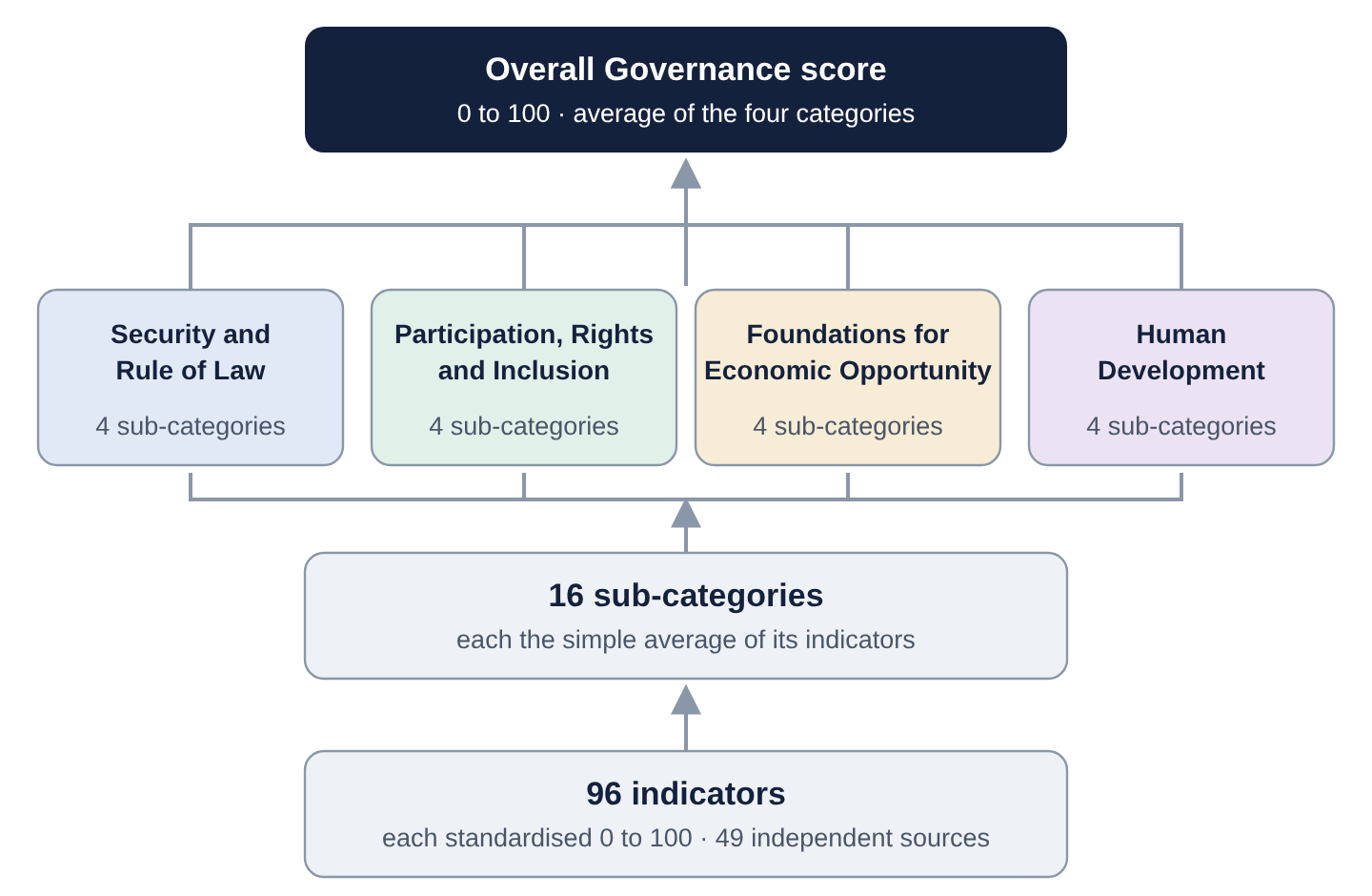
Figure 1. How the Index is built, as described in the Foundation’s published method. Diagram drawn for this article.
First, the definition. The Foundation defines governance as “the provision of political, social, economic and environmental goods that a citizen has the right to expect from their state”. The Index sets ideology aside and treats statehood as a delivery contract. For the Index, what counts is whether the machinery of government delivers.
Second, the architecture. The 2026 edition draws on more than 265,000 data points through a hierarchy of averages:
- The indicators. Ninety-six individual indicators, each standardised on a scale from 0 (the worst performance) to 100 (the best), drawn from 51 data sources in the 2026 edition.
- The sub-categories. The 96 indicators are clustered into 16 sub-categories. Each sub-category score is the average of its indicators.
- The categories. The 16 sub-categories are spread across four categories, four each: (a) Security and Rule of Law; (b) Participation, Rights and Inclusion; (c) Foundations for Economic Opportunity; and (d) Human Development. Each category score is the average of its four sub-categories.
At the apex, the Overall Governance score is, in the Foundation’s words, “the average of the underlying category scores”, so each of the four categories carries a quarter of it.
Third, the moving series. The Index is not a set of fixed annual snapshots. When new historical data arrive or the structure is strengthened, the Foundation updates the entire dataset for the whole time series, and it advises users to reference the most recent version. The Foundation’s own page also records that a review between 2018 and 2020 produced a re-worked framework for later editions. A score from an earlier edition is a reading from an earlier version of the record. None of this is hidden: the method is published and the data are free to read.
What a number can and cannot say
A number carries an authority that its reader has done nothing to earn. That is its usefulness, and it is its danger. We want to ask the question that comes after the method: what is a number like this allowed to say? The Foundation’s own published method makes the limits plain. There are three.
The first limit is arithmetic. In the 2026 edition, each level of the Index is the simple average of the level beneath it: indicators into sub-categories, sub-categories into categories, categories into an overall score on a scale of zero to 100. In statistics, an arithmetic mean is impartial. In political economy, a plain average can act as a veil. The Foundation says the overall score is “the average of the underlying category scores”, so each of the four categories carries a quarter of it. Over 2016 to 2025 the continent’s Overall Governance score rose by just 0.8 of a point, from 49.3 to 50.1. Beneath that figure, foundations for economic opportunity gained 3.7 points and human development 2.5, while security and rule of law lost 1.7 and participation, rights and inclusion lost 1.0 (Figure 2). Beneath the continental average, too, 30 countries improved, 23 deteriorated and one did not change. The Report names three of Africa’s most populous countries, Nigeria, DR Congo and South Africa, among those that deteriorated, so that just over half of Africa’s citizens live in a country where Overall Governance has declined. A reader who stops at the headline sees stagnation. A reader who goes beneath it sees two movements pulling against each other. The Foundation publishes both; the task is to read both.
Figure 2 puts the headline and the four categories on one scale, so that the two movements can be seen side by side.
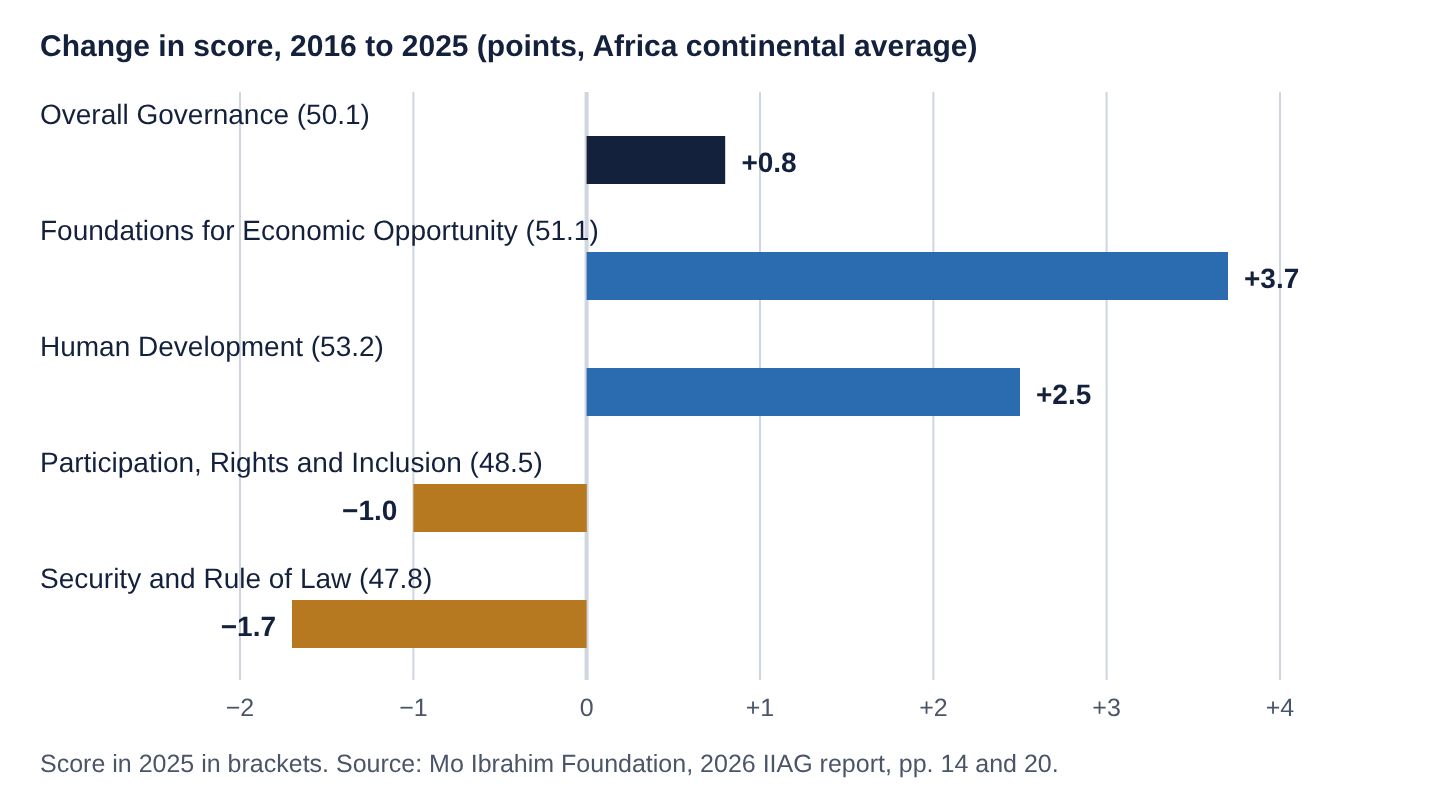
Figure 2. The headline and the categories beneath it, as the Foundation reports them for 2016 to 2025. Chart drawn for this article from the report’s figures.
Three of the countries the Report names show how differently a score can move (Table 1). South Africa ranks 5th of 54, as it did in nine of the ten years, but the Foundation classes its trend as increasing deterioration. Its score slipped from 67.0 to 66.6, with Security and Rule of Law down 3.8 points and Participation, Rights and Inclusion up 2.6. Nigeria fell from 27th to 38th as its score dropped 5.2 points, the only country to lose ground in all four categories. DR Congo, 48th, moved by just 0.3 of a point, a flat headline over a 4.3-point fall in Security and Rule of Law and a 4.0-point rise in Participation, Rights and Inclusion.
| Category | South Africa | Nigeria | DR Congo |
|---|---|---|---|
| Overall Governance | 66.6 (−0.4) 5th (5th in 2016) | 44.2 (−5.2) 38th (27th) | 34.0 (−0.3) 48th (47th) |
| Security and Rule of Law | 60.8 (−3.8) 11th (8th) | 38.6 (−11.2) 42nd (28th) | 27.7 (−4.3) 50th (48th) |
| Participation, Rights and Inclusion | 73.7 (+2.6) 5th (6th) | 47.8 (−5.4) 27th (24th) | 37.0 (+4.0) 41st (44th) |
| Foundations for Economic Opportunity | 67.7 (−0.5) 4th (2nd) | 44.9 (−4.2) 41st (23rd) | 31.5 (−2.8) 50th (48th) |
| Human Development | 64.3 (0.0) 10th (7th) | 45.4 (−0.2) 42nd (37th) | 39.8 (+1.9) 49th (49th) |
Table 1. Overall Governance and its four categories for three countries: 2025 score out of 100, change in points since 2016 in brackets, then rank among 54 countries, with the 2016 rank in brackets. From the Foundation’s data portal, where each country’s table can be read: South Africa, Nigeria, DR Congo. Overall scores, ranks and changes match the 2026 Report. Table drawn for this article from those figures.
The second limit is the data. The Index is only as good as what it can count. In the 2026 edition the Foundation reports that 31.9 per cent of the possible data points are missing at source, across 319 variables, 54 countries and ten years. The gaps are widest in two sub-categories: Rural Economy, at 76.2 per cent, because it rests on a single source that has published for only three years, and Education, at 62.8 per cent. The Foundation narrows the gap by linear interpolation, which brings the whole dataset down to 11.6 per cent missing, Rural Economy to 19.8 per cent and Education to 31.6 per cent. A figure supplied by interpolation is an estimate, not an observation. And Prof Cristina D’Alessandro of the University of Ottawa, a member of the Foundation’s expert panel, writes in the 2024 report that the Index does not yet use official national statistics, because they are generally not comparable in Africa. All of it matters to the person who is about to quote a score.
The third limit is stability. Scores are published to one decimal place, and ranks are calculated on those rounded scores, so a difference of a tenth of a point can separate two places. A rank is a convenience, not a verdict. And every new edition revises the whole series, with the Foundation’s advice to users being to reference the most recent version. A figure remembered from an earlier edition can differ from the figure the latest edition now gives for the same year.
So we put four questions to any number before we repeat it, and each one tests a limit above: what was counted, what was left out, how the parts were combined, and which edition it comes from.
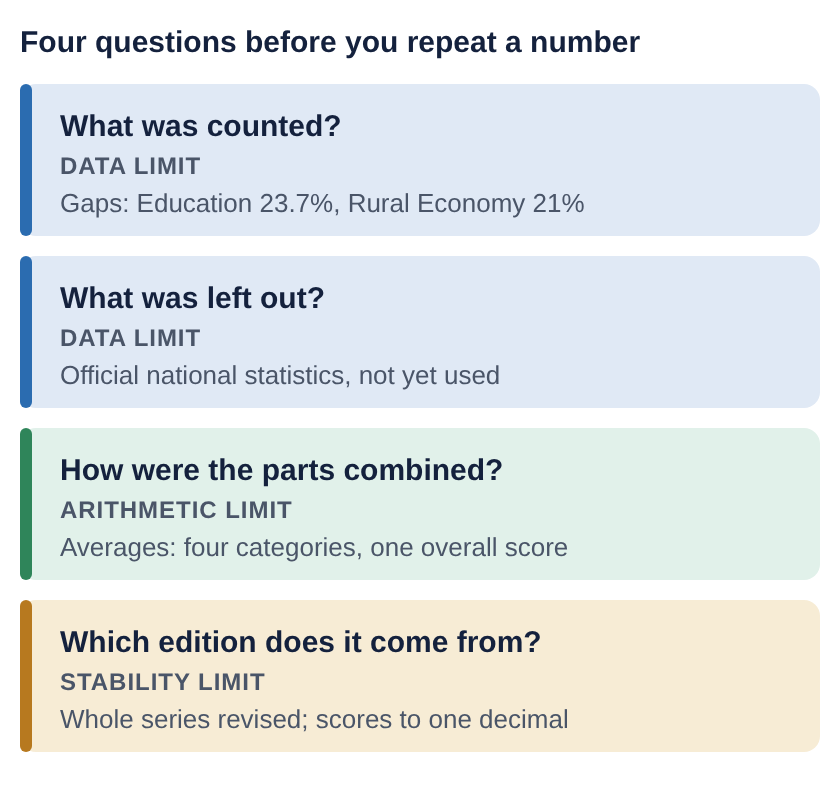
Figure 3. The four questions and the limit each one tests. Drawn for this article from the points made above.
A number that survives all four is worth repeating. It still does not tell anyone what to do.
What a country does with its number
What does a government do with a number it did not ask for? The published record offers two small answers. We give them no larger than the record does.
On 2 July 2013, in Djibouti, Dr Aisha Abdullahi, the African Union Commission’s Commissioner for Political Affairs, addressed a national workshop on the Foundation’s indicators for that country. She described the Index as a framework that citizens, public authorities and partners can use to assess how well public goods and services are delivered. She was candid about how such a measure is received: the Index is a private venture, she said, and its reports are “largely seen as antagonistic and often critical”. A 2018 piece on the Foundation’s website, by an author the page does not name, takes a different view of its purpose. It says the Index uses the same indicators for every country, whatever the size of its economy or its population, that it “does not make policy prescriptions”, and that it is not a tool that intends to criticise governments. Both statements can stand together. A measure can be neutral in its intent and still arrive as an accusation, and what a government does next is the whole of the question.
A second answer comes from the continent’s own system of peer review. A Foundation news item of 17 January 2017 records that the Mechanism’s heads of state and government, at their 25th Summit in Nairobi on 26 August 2016, decided to include the Foundation as one of five Strategic Partners. It says the two bodies then agreed five areas of collaboration to inform a memorandum of understanding. Among them are sharing knowledge and data and what the item calls “harmonisation” of the Index with the Mechanism’s own processes. An unsigned piece on the Foundation’s website, dated 15 November 2018, covers the launch of the 2018 Index in Pretoria, held in partnership with the Mechanism. It says the two bodies developed a memorandum of understanding in 2017, and that the signed memorandum names among its priorities the harmonisation and integration of the Index into the Mechanism’s processes. The African Union’s own page on the Mechanism now lists six strategic partners, the Foundation among them. The record we can point to states a designation, agreed areas of work, a signed memorandum and a joint launch. The pages we read state no result.
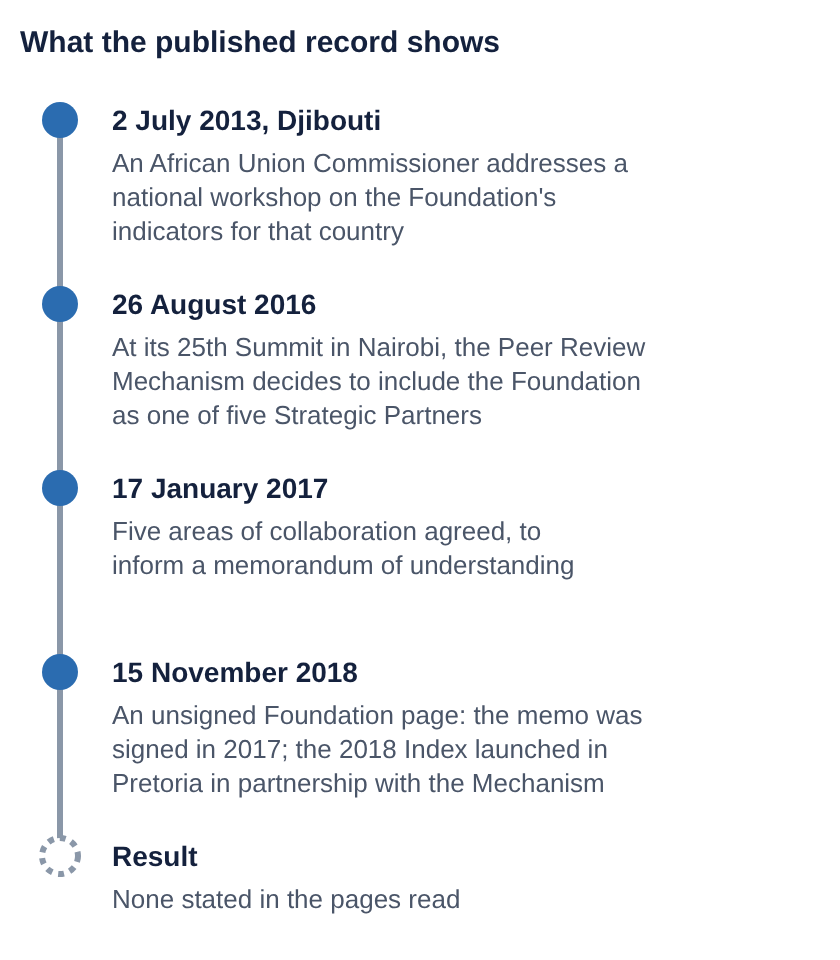
Figure 4. The dates the published record gives, and the point where it stops. Drawn for this article from the passages above.
That is the honest extent of what the published record lets us show. It shows the Index being read, hosted, argued over and written into partnerships. Between 29 October and 1 November 2026 we searched the Foundation’s site and news pages, the African Union and Peer Review Mechanism pages, and the web in English and French. We did not find a published account of what that use has changed. We would rather say so than suggest otherwise. We will not tell you what the Index has done for Africa; a number tells us where we stand, not whether our standing is the result of what we did. We can tell you what we believe any government should do when a number like this reaches its desk, and why none of it depends on who holds the office.
First, read all of it and not the headline. The Foundation publishes nearly 500 measures for anyone to explore, and its own report reads the whole decade against its turning points: gains until 2018, stagnation from 2019 to 2021, gains again from 2022. Figure 2 shows what a single headline can hide. A government that reads only its rank has read the thinnest line on the page.
Second, mend the data under the number. Mo Ibrahim writes in the 2024 report that “without sound data, there can be no sound public policy”. The 2026 Report records progress. The Capacity of the Statistical System improved in 47 countries, home to 92.9 per cent of Africa’s people. It gained 10.6 points over the decade, the third most improved indicator in the whole Index. A government cannot answer a score it cannot check. The offices that count births, schools, clinics and crimes are institutions, and their independence outlasts any one minister.
Third, treat what citizens say as evidence, not noise. Where it can, the Index builds into each sub-category an indicator drawn from Afrobarometer’s surveys of public perception. In the 2024 edition the three indicators that deteriorated most across the decade were all of that kind: perceptions of economic opportunity, of security and safety, and of social protection and lived poverty. Afrobarometer’s researchers, in a July 2026 guest brief hosted by the Foundation, report that over the past decade Africans’ evaluations of democracy have lagged behind their commitment to it. They add that support for democracy has edged downward over the past decade, while satisfaction with democracy, after a decline, has ticked back up slightly in the past three years. Where measured delivery and felt delivery part company, a speech is the wrong answer. Trust is restored by services.
Fourth, publish the number and answer it in public. The Index is free to every reader, so a government that says nothing about its own score leaves the telling to others. To answer is not to agree. It is to say which indicators one disputes and why, and what one will do about the rest.
Not one of these four is the work of a personality. Each is the work of an institution: a statistics office that is trusted, a service that is delivered, a ministry that can be asked to account, a record that is kept. That is why we hold that institutions matter more than the people who pass through them, and why we read an index as a test of what institutions deliver. Accountability for those who lead is a separate matter, and a necessary one; no index discharges it.
No number will build a clinic, keep a ledger honest or teach a child to read. People do that, in institutions that outlast them. The measure of governance is not the number but the answer we give to it. That answer is work, and it is ours to do.
“The future is not an accident.”
Dr Malusi Gigaba is a Scholar-Statesman, an ANC NEC Member, a former Cabinet Minister of the Republic of South Africa, a Member of Parliament, and a member of both the Portfolio Committee on Trade, Industry and Competition and the Portfolio Committee on Justice and Constitutional Development.
Solomon Atah is an award-winning documentary filmmaker, researcher, cultural writer, author of 3 books and Host of The Solomon Atah Podcast, an academic platform featuring long form conversations with leading academics, researchers and policy makers, with more than two decades of film and media industry experience in South Africa with an MFA in producing, he bridges academic research, storytelling and public knowledge.