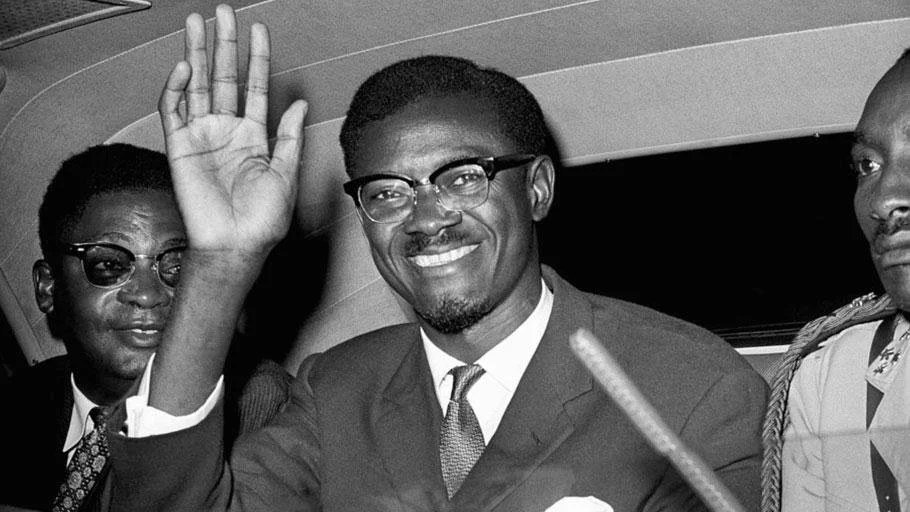
On 2 July 1925, in a mission village in the Kasai region of what was then the Belgian Congo, a child was born who would live to be thirty-five years old and has now been dead for sixty-five of the years since. Patrice Lumumba turned 101 three days ago, on 2 July 2026. In 2026, the country he led as prime minister for barely ten weeks in 1960 is still at war over the same minerals that made his removal profitable, and a Belgian court is, for the first time in history, trying a former colonial official for his murder. The country's own dictator once built him a monument. The country's own war never let his argument die.
Kongo, Not a Historyless, Backward Society and People Up for the Colonial Picking
In The African Origin of Civilisation: Myth or Reality, Cheikh Anta Diop exhorts us — in recognising ancient Egypt's cultural, scientific, and political achievements as the direct source of the classical civilisations of Greece and Rome, which in turn shaped the modern Western world — to correct the historical record and thus restore the dignity of the African continent. In Precolonial Black Africa, Diop argues that precolonial Black Africa was not a historyless or primitive continent, but rather the cradle of ancient (Egyptian) civilisation, which — based on archaeological, linguistic, and anthropological evidence — developed sophisticated social, political, and economic systems which included centralised states, organised militaries, and advanced metallurgy long before European contact. Diop thus refutes the racist notion of a “civilising” mission from outside Africa, asserting that the continent's internal dynamics and innovations were the true foundation of its history (Precolonial Black Africa: A Comparative Study of the Political and Social Systems of Europe and Black Africa, from Antiquity to the Formation of Modern States).
Like many contemporary African polities, the area known as the Belgian Congo was not a unified political entity prior to colonisation. Rather, it comprised a rich tapestry of independent kingdoms, chiefdoms, and communities. Notable examples included the Kongo Kingdom (centred in present-day Angola and parts of western DRC), the Luba Kingdom (in the southeastern DRC), renowned for its complex political and social structures, including a system of titled chiefs and sacred kingship; the Lunda Kingdom (in the south-central region), which boasted a sophisticated political and economic system; the Kuba Kingdom (in the central region); and societies such as the Azande and Mangbetu in the northeast and north, often organised into smaller chiefdoms or decentralised communities with distinct cultural and political frameworks.
In addition, numerous other groups lived in stateless societies, structured by lineage, clan, or village, featuring varying levels of social hierarchy and economic specialisation. The region was characterised by remarkable cultural diversity, local trade networks, and economies centred on agriculture and artisanal production. Colonial rule, initiated under King Leopold II of Belgium in the 1880s, forcibly amalgamated these disparate peoples into the Congo Free State, a brutal private colony that, following international outrage over its atrocities, became the Belgian Congo in 1908.
A State Built to Extract
Congo did not begin as a colony. It began, uniquely among African territories, as the private property of a single European monarch. In 1885, the Berlin Conference, called by Otto von Bismarck at the request of Belgium's King Leopold II, recognised Leopold's International Congo Association as sovereign over a territory more than seventy times the size of Belgium itself. On 1 August 1885, Leopold declared it the Congo Free State: not a Belgian colony, but his personal possession, administered from Brussels, answerable to no parliament.
What followed over the next twenty-three years was among the most lethal resource-extraction projects in modern history, the brutal execution of which still leaves contemporary human-rights based society still trembling with chills. Villages were assigned rubber quotas enforced by the Force Publique, Leopold's private colonial army; failure to meet a quota could mean a burned village, a kidnapped family, or a severed hand presented to a white officer as proof a bullet had not been wasted. A child, a woman or elderly person were neither spared nor shown any mercy. Historians' estimates of the death toll from murder, starvation and disease during Leopold's rule range as high as ten million, roughly half the territory's population. In 1908, international outrage forced Belgium's government to take the territory from its king and administer it as an ordinary colony, the Belgian Congo. The extraction did not stop. It was simply nationalised.
This is the state Lumumba was born into in 1925 and the state he was, briefly, given charge of in 1960: a territory whose borders, administrative logic and entire economic architecture had been built, from its very founding document, around the efficient removal of wealth by whoever held the concession. Understanding that origin matters, because everything that happened to Lumumba, and everything that has happened in eastern Congo since, is a variation on the same argument over who is entitled to hold that concession.
From Postal Clerk to Prime Minister
Lumumba did not arrive in politics through inherited status or elite education. He worked as a postal clerk and later a beer company salesman in Stanleyville, wrote for the Congolese press under his own name and pseudonyms, and organised trade unions at a time when Belgian colonial law treated Congolese political organisation as a threat to be policed. In 1958 he co-founded the Mouvement National Congolais, the first major Congolese party to reject an ethnic or regional base in favour of a national one. That choice was itself a political argument: that the Congo's 200-odd ethnic groups had more to gain by uniting against colonial rule than by competing for the scraps colonial administration was prepared to hand out region by region.
The MNC's platform combined three demands: immediate independence, the gradual Africanisation of a civil service and army that Belgium had kept almost entirely white, and a foreign policy of neutrality between the two Cold War blocs.
Months after founding the MNC, in December 1958, Lumumba's continental profile changed almost by accident. A delegation travelling from Nairobi to Ghana broke their journey in Léopoldville, tracked Lumumba down, and cabled ahead for funds to bring a Congolese delegate to the All-African Peoples' Conference then convening in Accra, 8 to 13 December. He arrived representing the MNC as a delegate from a territory not yet independent, one voice among more than 300 gathered from roughly 65 organisations across 28 African territories under the conference's slogan, “Hands Off Africa.” The room he walked into was extraordinary: Frantz Fanon represented Algeria, Sékou Touré represented Guinea, Kenneth Kaunda represented Northern Rhodesia, Joshua Nkomo represented Southern Rhodesia, Holden Roberto represented Angola, and Michael Scott represented South West Africa, most of them men who would go on to lead their own countries' independence movements or governments. Lumumba addressed the conference on 11 December, and the speech marked a visible rupture with his earlier politics: where he had once described colonialism in more accommodating terms and framed the Congolese struggle as one for racial equality within a Belgo-Congolese community, at Accra he redefined it, unambiguously, as a fight against colonialism itself, one to be won through African nationalism rather than granted through European goodwill. Kwame Nkrumah, hosting the gathering as Ghana's prime minister, took a personal interest in him, pledged Accra's support, and Lumumba left attached to the conference's new permanent organisational structure, headquartered in Accra under the Trinidadian Pan-Africanist George Padmore; his politics hardened afterward into the militant, deadline-driven nationalism that would define the next two years.
South Africa's liberation movement was in the same room. The ANC's delegate, Alfred Hutchinson, one of the accused in South Africa's Treason Trial, arrived on the conference's second day to public celebration, part of a three-person South African delegation that also included the writer Ezekiel Mphahlele and Mary-Louise Hooper. No account has surfaced confirming a direct exchange between Lumumba and the South Africans specifically; Hutchinson later wrote of his journey into exile in his 1960 memoir Road to Ghana, and Mphahlele kept his own record in an “Accra Conference Diary,” published in 1960 as a chapter in Langston Hughes's anthology An African Treasury, either could in principle settle the question, though neither is readily searchable outside library access. What is documented is co-presence: Lumumba and organised South African resistance to apartheid were in the same hall in Accra eighteen months before Congo's independence and the Sharpeville massacre arrived within three months of each other in 1960.
When Belgium, moving faster than it had planned after riots in Léopoldville in January 1959, called elections for May 1960, the MNC won more seats than any other party. On 23 June 1960, Lumumba was sworn in as the first prime minister of an independent Congo. He was thirty-four years old.
“Positive Neutralism”: What Lumumba Actually Believed
Lumumba described his politics as a “positive neutralism”: a refusal to import either Western liberal capitalism or Soviet communism wholesale, in favour of an African route to development answerable to African needs. Practically, that meant two commitments he never abandoned. The first was unity over tribalism, the conviction that a colonially fractured territory the size of Western Europe could only survive as one state if its politics stopped organising along ethnic lines. The second was that independence without economic control was independence in name only, that a Congo which kept Belgian firms in charge of its copper, its diamonds and its uranium had not actually left the Congo Free State's arrangement behind, only its name.
He said as much on independence day itself. Addressing the ceremony on 30 June 1960, with King Baudouin of Belgium seated a few metres away after a speech praising Belgian colonial “genius”, Lumumba departed from the conciliatory script the occasion called for:
“It was filled with tears, fire and blood. We are deeply proud of our struggle, because it was just and noble and indispensable in putting an end to the humiliating bondage forced upon us.”
He closed that speech by calling Congo's independence “a decisive step towards the liberation of the whole African continent,” a line that reads today less as rhetorical flourish than as an accurate prediction of how seriously other powers would come to regard the precedent he was setting. (See: full speech text)
Ten Weeks in Power
Independence did not bring the stability Lumumba's government needed to test its ideas. Within five days, the Force Publique, the same colonial army built to enforce Leopold's rubber quotas and still commanded almost entirely by Belgian officers, mutinied over pay and the absence of Africanisation. Within two weeks, Moïse Tshombe declared the mineral-rich province of Katanga independent, with the direct support of Union Minière du Haut-Katanga, the Belgian mining conglomerate whose assets Katanga's secession would keep out of Lumumba's reach. Belgium flew paratroopers back into the country it had just formally left, ostensibly to protect Belgian nationals, in practice defending the Katangese secession that protected Union Minière's concessions.
Lumumba asked the United Nations to help restore Congolese sovereignty over Katanga. The UN sent troops but declined to use them against the secession, a decision Lumumba read, not unreasonably, as taking Belgium's side. He then asked Washington for support and was refused. When he turned to Moscow for logistical assistance to move troops against Katanga, that decision, more than any actual ideological conversion, is what moved him from inconvenient to intolerable in the eyes of Brussels and Washington alike. President Joseph Kasavubu dismissed him as prime minister in September 1960; Lumumba disputed the dismissal's legality; and Joseph-Désiré Mobutu, the army chief of staff Lumumba himself had appointed weeks earlier, used the resulting deadlock to seize power in a coup on 14 September 1960. Lumumba was placed under house arrest, escaped in late November, and was recaptured by Mobutu's forces on 1 December 1960.
The Killing and the Cover-Up
On 17 January 1961, Lumumba and two political allies were flown, at Belgian insistence, to Katanga, into the custody of the same secessionist authorities Belgium had helped arm. He was beaten during the flight and on arrival, then executed by firing squad that evening under the direct supervision of Katangese leaders and Belgian officers serving in Katanga's gendarmerie. His body was later dug up and dissolved in sulphuric acid by a Belgian police commissioner tasked with ensuring no grave could become a site of pilgrimage. That officer kept one memento: a gold tooth pulled from Lumumba's skull, which stayed in his family's possession in Belgium for six decades.
External Forces Implicated
The case that Lumumba's death was not simply a Congolese political killing but an internationally engineered one no longer rests on suspicion. It rests on three separate governments' and institutions' own subsequent admissions.
The United States Senate's Church Committee found in 1975 that CIA director Allen Dulles had cabled Léopoldville station chief Larry Devlin that Lumumba's removal was “an urgent and prime objective,” and that the CIA's Sidney Gottlieb personally delivered poison to the Congo intended for Lumumba's food or toothbrush. Devlin's own contacts inside the Congo were not incidental to the plot; the same station chief had, in the months before the killing, been cultivating the army chief of staff who would go on to rule the country for the next three decades. The CIA's own historical review of the episode does not dispute that the agency plotted the killing, only that its plot was not the one ultimately carried out. (See: CIA historical review)
Belgium's role is now the most extensively documented of all. A Belgian parliamentary commission of inquiry concluded in 2001 that Belgian government representatives had organised Lumumba's transfer into Katangese custody knowing what awaited him there, a finding that led Belgium's government to issue a formal apology in 2002 acknowledging “moral responsibility” without accepting legal liability. In June 2022, the recovered tooth was returned to the Lumumba family in an official ceremony, and in March 2026, for the first time in the history of European decolonisation, a Belgian court ordered a former senior Belgian official, career diplomat Étienne Davignon, to stand criminal trial over his alleged role in the killing. (See: case background)
For further reading: Georges Nzongola-Ntalaja, The Congo from Leopold to Kabila: A People's History (2002) — the standard single-volume account of the country's trajectory from Leopold's private rule through Lumumba, Mobutu and Kabila to the present.
Ludo De Witte, The Assassination of Lumumba (1999) — the book that changed the historical record. De Witte's research was the direct catalyst for the Belgian parliamentary inquiry of 2001, the inquiry whose findings this piece draws on for the account of Belgium's role.
From Mobutu to M23: How the Removal of One Man Built the War Congo Fights Today
The connection between Lumumba's death and the war eastern Congo is fighting in 2026 is not a metaphor. It is an unbroken institutional chain, and it runs through a single man.
Joseph-Désiré Mobutu, the army chief of staff Lumumba had appointed and Larry Devlin had cultivated, seized full power in a second coup in November 1965 and ruled, latterly as Mobutu Sese Seko of a country he renamed Zaire, for the next thirty-two years. Washington's reasoning was explicit at the time and has never seriously been disputed since: a strongman loyal to Western interests, however corrupt, was preferable to a nationalist who might again turn to Moscow or insist that Congo's copper and cobalt answer to Congolese, not foreign, shareholders. Between 1965 and 1991, the United States alone provided Mobutu's government with more than a billion dollars in development aid, over two hundred million dollars in military assistance, and, separately, close to one hundred and fifty million dollars in CIA bribes and secret payments to Mobutu personally. He returned the investment as a Cold War asset: reliably anti-communist, reliably open to Western mining interests, and reliably willing to let American aircraft use Zairean territory to help suppress rebellions against his own rule in 1977 and 1978.
What Mobutu built with that cover was not a state in any functional sense. It was a kleptocracy in the most literal meaning of the word: rule by theft. He and his inner circle are estimated to have siphoned between four and fifteen billion dollars from the public purse over three decades, hollowing out the civil service, the army and the courts, and ruling instead through patronage networks organised, deliberately, along the ethnic and regional lines Lumumba had spent his political life trying to dissolve. When the Rwandan genocide of 1994 sent over a million refugees, including the organisers of the genocide itself, across the border into a Zairean east that Mobutu's state had no functioning capacity to police, the result was not a new crisis so much as the first real test of a state that had never been built to withstand one. It failed within two years. A Rwandan-backed rebellion, the AFDL, swept across the country and entered Kinshasa in May 1997, ending Mobutu's rule and installing Laurent-Désiré Kabila, an unfinished handover of power that curdled within a year into the Second Congo War, a conflict so large it drew in nine African armies and is still, more than a quarter-century later, the deadliest conflict anywhere in the world since 1945.
Eastern Congo has not had a period of genuinely settled state authority since. The M23 armed group that seized Goma and Bukavu in 2025 is operating in exactly the vacuum Mobutu's kleptocracy created and never fully repaired: a region where the central state's writ is thin, where UN experts have repeatedly documented Rwandan state support for the militia, a finding Kigali disputes, and where in March 2026 the US Treasury sanctioned senior Rwanda Defence Force officials for what it called violations of the peace framework Washington itself had brokered.
That framework, signed in Washington in June 2025 and extended by a Regional Economic Integration Framework the following August, ties an end to the fighting explicitly to mineral access. The Democratic Republic of Congo supplies an estimated seventy percent or more of the world's mined cobalt, the mineral without which no lithium-ion battery can be built at scale, alongside significant coltan, copper and lithium reserves. Since the deal, American firms, some backed by prominent Western financiers, have moved to secure mining and processing rights across the east. Human Rights Watch has warned that a peace built on foreign mineral access, without enforceable protection for the Congolese communities living on top of those minerals, risks reproducing the extraction economy rather than ending the conflict that fuels it. (See: HRW analysis)
The deal, meanwhile, has not stopped the war it was meant to end. As recently as late June 2026, fighting continued around Minembwe in South Kivu's highlands even as diplomats from the DRC, Rwanda, Qatar, the African Union and the United States met in London for their sixth oversight meeting under the Washington Accords, expressing what their own communiqué called “serious concern” over continued fighting and drone strikes on civilians.
Whose Wealth, Whose Peace: Who Actually Benefits
Lumumba's core argument in 1960 was narrow and specific: that a nation's minerals should build that nation, not merely pass through it on the way to somebody else's refinery. Sixty-five years later, the structure his removal was designed to preserve is largely still in place; only the names of the external parties have changed. Almost none of Congo's cobalt leaves the ground ready for a battery. It is exported as cobalt hydroxide, a raw semi-processed intermediate, and shipped principally to China, which now holds the large majority of the world's cobalt-refining capacity and converts that hydroxide into the battery-grade chemicals that power the electric vehicles and phones of the industrialised world. The country that holds the ore captures the smallest share of the value it creates; the country that holds the refinery captures the rest. It is the same arrangement, updated only in the name of the mineral, that carried rubber out of Leopold's Congo and copper out of Katanga a century before.
We should be honest that not all of this is externally imposed. Decades of internal governance failure, the ethnic patronage politics Mobutu entrenched, and the readiness of some Congolese and regional actors to profit personally from smuggled minerals have their own weight in this war; external capital did not have to work hard to find local partners willing to prolong it. We should never exempt or absolve Africa's own neopatrimonial leaders from culpability for Africa's current socio-economic woes. Our own agency remains crucial to acknowledge if this historical wrong must be corrected. But naming that internal complicity does not answer the prior question, which is why the state built to resist it was destroyed in 1961 and replaced with one built to serve it. Kwame Nkrumah wrote, in 1965, that a united Africa could not be subdued by limited war, that it is “only where small States exist that it is possible, by landing a few thousand marines or by financing a mercenary force, to secure a decisive result.” (Neo-Colonialism: The Last Stage of Imperialism, full text) Eastern Congo, sixty-one years on, is the decisive result.
This is the mechanism by which resource wars fracture continental unity rather than merely regional stability. A conflict that pits Congo against a neighbour it should, in principle, be building continental institutions alongside becomes instead a conflict that external capital has every incentive to prolong at manageable intensity: intense enough to keep formal state authority weak and informal extraction cheap, contained enough not to threaten the supply chains that depend on it. The African Union's own institutional weakness on Congo, its absence from the room where the Washington and Doha frameworks were actually negotiated, is not incidental to this pattern. It is the pattern.
Memory, Captured and Kept
None of this has erased Lumumba from Congolese public life. What 2026 makes visible is that memory itself has been a battleground, fought over by the same kinds of actors who fought over the minerals, and that not everyone claiming to honour Lumumba has told the truth about him.
Mobutu understood this before anyone. In 1974, at the height of his authenticité campaign to strip the country of colonial symbols and construct a new national mythology around himself, his government erected a statue of Lumumba and, alongside it, the 200-metre Tower of Limete marking Congolese independence, both on the boulevard linking Kinshasa's airport to the city centre. The man being memorialised had been destroyed with the direct assistance of the man doing the memorialising, or at minimum of the CIA station chief who had cultivated him for exactly that purpose. Mobutu's monument did not invite scrutiny of that fact; it foreclosed it, folding Lumumba into a state myth of national authenticity while Mobutu spent three more decades running the same extraction economy for a different set of foreign patrons. A statue, it turns out, is not evidence of a reckoning. It can just as easily be the absence of one, cast in bronze.
The two forms of memory that have actually done the work Mobutu's monument only pretended to do arrived in the same year, from opposite ends of the institutional spectrum. In courtrooms, it is the Davignon prosecution: a state, Belgium, finally allowing a court rather than a parliamentary apology to test the facts. On football terraces, it is a private citizen who owes neither government anything. Michel Nkuka Mboladinga, born on 26 September 1976 and turning fifty later this year, has attended DR Congo's national team matches since 2013 and stood motionless for the full ninety minutes, arm raised to the sky, reproducing the exact pose of that same 1974 statue. Asked why, he has been direct: “He's my inspiration. Patrice Lumumba is a symbol of unity, the one who taught Congolese to stand and to be proud.” He calls it a patriotic mission, not a performance. He became internationally recognisable during the 2025 Africa Cup of Nations, and he carried the same tribute to this year's World Cup, missing DR Congo's decisive group match against Uzbekistan only because the United States denied him a visa. (See: his story)
No ministry commissioned Mboladinga's gesture and no party choreographed it, which is precisely what distinguishes it from Mobutu's. A private citizen, forty-nine years old, born fifteen years after Lumumba's death, decided on his own initiative that his country's founding prime minister would be remembered at every match his country's team played, for as long as his own body could hold the pose.
What This Should Teach Us
Four lessons sit inside this history, and none of them are comfortable.
The first is that charismatic conviction is not a substitute for institutional protection. Lumumba was right about almost everything that mattered, unity over tribalism, sovereignty over resources, non-alignment over Cold War clientelism, and he was removed in ten weeks because the continent he was arguing for had no standing military, legal or diplomatic architecture capable of defending a member state's chosen government from external removal.
The second is that a strongman is not stability. What Mobutu actually represented was thirty-two years of the same extraction Lumumba died opposing, running under different management, until the state built to enable it collapsed and left behind exactly the vacuum today's war now occupies.
The third is that memory is not automatically honest, and a monument is not automatically a reckoning. Only sustained institutional pressure, a parliamentary inquiry, a formal apology, a criminal trial decades apart, has moved Lumumba's case from myth to record. Everything else, including the bronze Mobutu himself commissioned, was decoration on an unclosed file.
The fourth is that while the Belgians and their traitorous accomplices succeeded to kill Lumumba, all they did was kill a man, not his ideas. Lumumba's ideas have endured to the present moment, and that is why so many years after his cowardly assassination and dissolution, he continues to tower as a living monument of Africa's noblest ideals for freedom, rather than a dead and forgotten “has-been” relegated only to his close family's memory. Everywhere in Africa, today's youth are seeking the new modern-day Lumumbists, champions and doyens of Africa's genuine emancipation.
Finally, let us remember what Thomas Sankara (Thomas Sankara Speaks: The Burkina Faso Revolution, 1983–1987) said on the Fourth Anniversary of the Burkina Faso Revolution, that,
“The revolutionary does not look for short cuts and yet requires that we all march together, united in thought and in deed. This is why the revolutionary must be a perpetual teacher, a perpetual question mark. And if the masses do not yet understand, it is our fault. We must take the time to explain and convince them so that we can act with them and in their interests... Revolutionaries are not afraid of their own mistakes. They have the political courage to admit them publicly, because doing so means committing oneself to correcting them and doing better. We should prefer one step forward with the masses to ten steps without them.”
Sankara continued in the same speech to say,
“As revolutionaries we have chosen the difficult road, which means we must go beyond ourselves, surpassing ourselves individually and collectively... our revolution is not sadness and bitterness but rather the enthusiasm and pride of an entire people that is taking charge of its destiny and is thereby discovering its own dignity.”
As is explained above by his contemporary, Sankara, Lumumba understood that there were no shortcuts in the revolution and that success and victory depended on unity in thought and action, as well as on acting in unison with the masses of the Congolese and broader African people. Revolutionaries must be both teachers and questioners, and that the difficult road ahead required that we as a people surpass ourselves, individually and collectively. The present African challenges require such revolutionaries and leaders, who default to unity than elitism and division, to being teachers and questioners, to humility and submission to the greater cause, to epitomising the noble vision of a free, united and prosperous Africa, who reject the notion that our collective and national problems require that we splinter more into unsustainable microstates and other little divisions that we rejected in our country at the advent of our democracy when the minority regime offered federalism as a form of government for the new democratic South Africa.
Lumumba's killers tried to erase him completely. They dissolved his body in acid and scattered what remained precisely so that no grave could become a shrine. They did not reckon with a dictator who needed his myth badly enough to build him a statue while burying the truth of his own role. They did not reckon with a tooth kept as a trophy, returned decades later to the family that never stopped asking where he was. They did not reckon with a Congolese fan willing to stand still through ninety minutes of football, year after year, so that his country would keep looking at the man Belgium and Washington had decided it should forget.
The unfinished argument Lumumba died making, that African wealth should build African nations rather than pass through them, and that African unity was a prerequisite for African progress, is still the argument eastern Congo's war is actually about. That is the part no courtroom verdict against a ninety-three-year-old former diplomat will resolve on its own, and no statue, however sincerely intended, ever has. It falls, as it always has, to the living: to the institutions still deciding whether Congolese and African sovereignty over Congolese and African resources is a principle worth enforcing, or merely one worth apologising for having violated, a generation or two after the fact.
Africa does not need another monument. It needs the standing military, legal and economic architecture Lumumba never lived long enough to build, and that his removal proved, in ten weeks, we cannot survive without.
“The future is not an accident.”
Dr Malusi Gigaba is a Scholar-Statesman, an ANC NEC Member, a former Cabinet Minister of the Republic of South Africa, a Member of Parliament, and a member of both the Joint Standing Committee on Defence and the Portfolio Committee on Trade, Industry and Competition.