South Africa's immigration debate has become one of the most emotionally charged public conversations of our democratic era. Communities are frustrated. Government institutions are under pressure. Political actors have become increasingly polarised. Public confidence in the state's ability to manage migration has weakened, while social cohesion continues to be tested.
Yet amid the growing anger, one reality remains striking: the quality of the public conversation has steadily declined. The national debate is increasingly driven by slogans rather than solutions, outrage rather than evidence, and confrontation rather than policy.
Every few months the country witnesses familiar scenes. Streets are barricaded. Businesses are forced to close. Communities demand action against undocumented migration. Civil society organisations issue statements. Government promises interventions. Then, after the immediate tension subsides, little changes. The structural issues remain unresolved, only to re-emerge with greater intensity months later.
This article is not an attempt to determine who is right or wrong in that debate. Nor is it intended to dismiss the genuine frustrations experienced by many South Africans or the difficult circumstances confronting migrants themselves.
Instead, it asks a more fundamental question: what would a practical, constitutional and economically sustainable immigration framework actually look like?
South Africa has reached a point where neither denial nor populism offers a credible path forward. Calls for mass deportation may resonate emotionally with many citizens frustrated by unemployment, crime and pressure on public services. Equally, appeals that ignore legitimate concerns about border management, documentation and state capacity fail to engage honestly with the realities facing communities.
Neither extreme provides an adequate answer.
The challenge before South Africa is to reconcile constitutional values with effective governance; to balance human dignity with the rule of law; and to strengthen border management while recognising the economic and social realities of migration in a highly interconnected region. Achieving that balance requires something that has become increasingly scarce in our public discourse: thoughtful leadership, rigorous analysis and practical policy proposals. Above all, it requires those with knowledge and expertise to participate in the conversation.
The Comfortable Have Left the Building
Before discussing policy options, South Africa must confront a more uncomfortable question. Where have our thinkers gone?
Throughout our history, periods of national crisis have produced individuals willing to place their knowledge, professional success and personal comfort at the service of society.
Oliver Tambo was a distinguished lawyer. Walter Sisulu successfully operated one of Johannesburg's first Black-owned estate agencies. Nelson Mandela was building a promising legal career before dedicating himself fully to the struggle. Pixley ka Isaka Seme returned from Columbia University and Oxford to help found the African National Congress. Charlotte Maxeke became one of Africa's earliest Black women graduates and dedicated her life to education and public service. These men and women possessed every reason to pursue comfortable private lives. Instead, they accepted responsibility for helping shape the future of their country.
The brighter day is rising upon Africa.
Those were the words the young Seme delivered to an American audience in 1906, before he came home to help build the movement that would carry that conviction into a century of struggle. Their contribution reminds us of an enduring principle: when society confronts profound challenges, expertise carries public responsibilities.
South Africa has never lacked capable people. Our universities continue to produce outstanding graduates. Our research institutions generate world-class scholarship. Our professionals are respected across the globe. Yet too often, our best thinking remains confined to academic journals, corporate boardrooms and specialist conferences, while the country's most difficult public policy questions are debated without sufficient evidence or informed analysis.
Migration has become one such question. Where are the economists examining its fiscal implications? The urban planners studying settlement patterns? The data scientists developing evidence-based population models? The legal scholars proposing constitutional pathways for reform? The public health specialists assessing service delivery pressures? The engineers, demographers and development practitioners capable of translating research into practical policy?
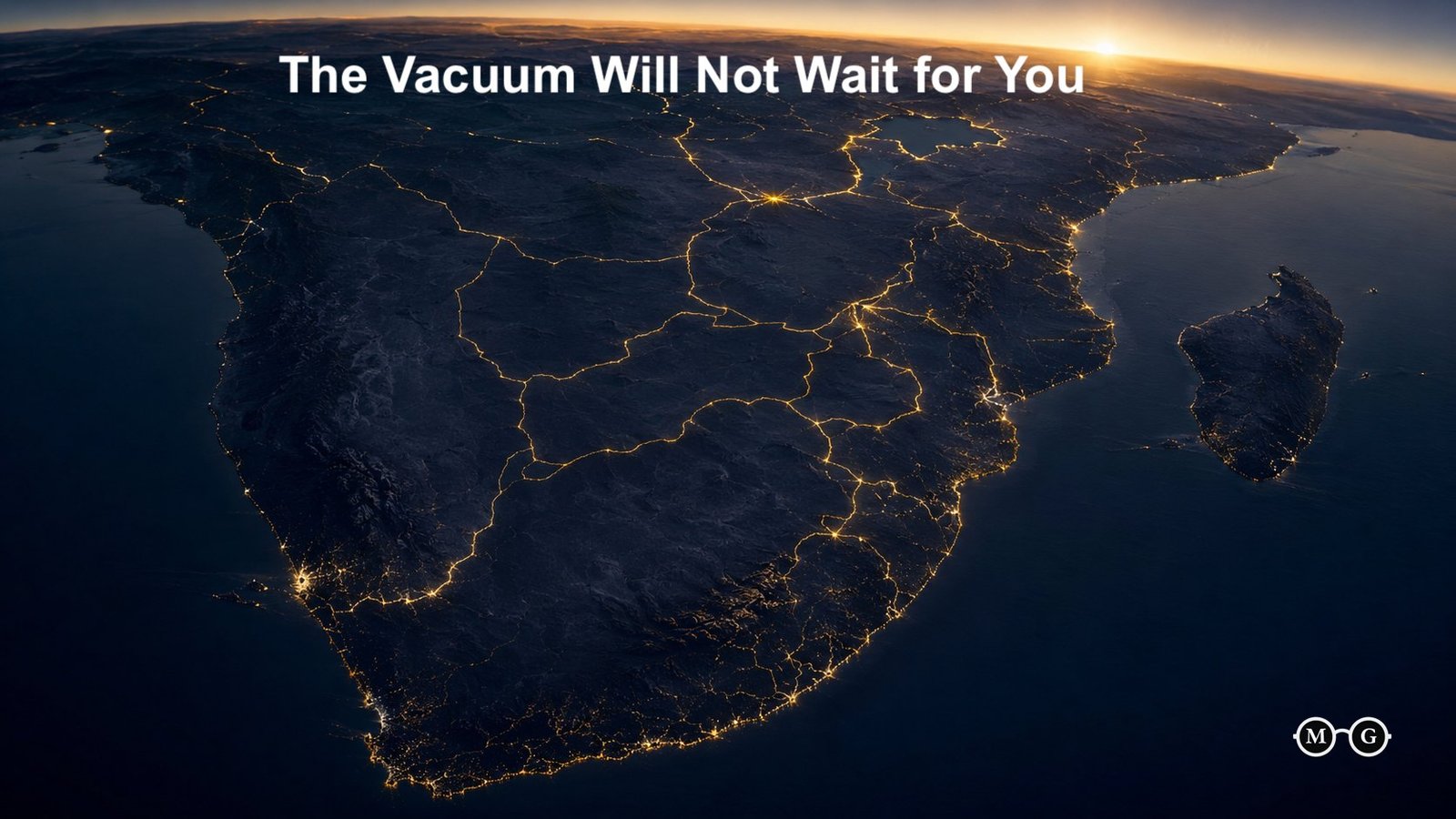
These voices exist. What is often missing is their participation in the public square. The absence of informed voices creates a vacuum. And public policy vacuums rarely remain empty for long. They are quickly occupied by simplified narratives, political opportunism and solutions that may satisfy public anger without addressing underlying causes.
South Africa deserves better. Our democracy has always benefited when rigorous ideas challenge conventional thinking. Today's immigration debate should be no different.
Why Deportation Is Not a Policy
The dominant public response to South Africa's immigration challenges is increasingly straightforward: remove undocumented migrants, strengthen enforcement, and deport those who have entered or remained in the country unlawfully.
The frustration underpinning this view is understandable. Communities experiencing unemployment, pressure on public services, crime, and economic hardship expect the state to exercise effective control over its borders and immigration system. That expectation is entirely legitimate.
The question, however, is not whether South Africa should uphold its immigration laws. It should. The more important question is whether mass deportation, as it is often presented in public discourse, constitutes a practical, sustainable, or economically viable policy solution. Evidence suggests that it does not.
According to the 2022 Census, approximately 2.4 million people living in South Africa reported that they were born outside the country. Demographers have cautioned that this figure is likely to undercount undocumented migrants, who are generally more difficult to enumerate. Other estimates suggest that South Africa's total migrant population may be significantly higher, although precise figures vary depending on methodology and definitions. Any serious policy discussion must therefore acknowledge the uncertainty surrounding migration data while recognising that the scale of migration is substantial.
Even if one adopts the most conservative estimates, the logistical implications of a mass deportation programme are enormous. Every individual is entitled to due administrative process under South African law. Identity must be established. Immigration status must be verified. Appeals and legal processes must be respected. Bilateral arrangements with countries of origin must be coordinated. Detention facilities, transportation, border processing, and administrative capacity would all need to operate at a scale far beyond current institutional capability.
South Africa's immigration challenge is therefore not simply a question of political will; it is also one of institutional capacity.
Border management presents a similar reality. South Africa shares an extensive land border with six neighbouring states. Much of this border traverses difficult terrain, including rivers, mountains, game reserves, and remote rural areas. Managing such an extensive border requires sophisticated surveillance systems, adequate personnel, regional cooperation, modern technology, and sustained investment. It cannot realistically be reduced to a simple question of erecting fences or increasing patrols.
This is precisely why the establishment of the Border Management Authority represented an important institutional reform. The long-term challenge now lies not in developing new legislation alone, but in ensuring that existing institutions are adequately resourced, integrated, and capable of fulfilling their mandate effectively.
Equally important is recognising the social reality that migration has become embedded within South Africa's economic and community life. Many migrants have lived in South Africa for years. They have established businesses, formed families, contributed to local economies, and raised children who know no other home. Others occupy critical positions within agriculture, construction, hospitality, logistics, healthcare, and informal commerce. These realities do not diminish the state's responsibility to enforce immigration laws; rather, they illustrate why simplistic solutions often fail to resolve complex social challenges.
A sustainable immigration framework must therefore distinguish between lawful enforcement and practical governance. The objective should not be to choose between compassion and the rule of law. Effective public policy requires both.
South Africa has already begun to recognise this principle. As one of the authors experienced directly while serving as Minister of Home Affairs, the 2016 Green Paper on International Migration, and the subsequent 2017 White Paper on International Migration, proposed a more integrated approach to migration governance, while later reforms, including the establishment of the Border Management Authority, were intended to strengthen institutional coordination and improve border management. The challenge has not been the absence of policy direction, but the uneven pace of implementation and institutional capacity — a limitation this author witnessed at first hand.
The lesson is clear: South Africa cannot govern migration through periodic crises and reactive enforcement alone. It requires a coherent system that combines secure borders, effective registration, reliable data, lawful enforcement, regional cooperation, and meaningful economic planning. That is the foundation upon which a durable immigration framework should be built.
From Crisis Management to Migration Governance
If mass deportation is neither practical nor sustainable, what should South Africa do instead? The answer is not to abandon immigration enforcement. Equally, it is not to ignore legitimate public concerns about border security, economic participation, and pressure on public services. The answer lies in replacing reactive crisis management with a modern system of migration governance.
Migration is neither a temporary phenomenon nor a uniquely South African challenge. Throughout history, people have moved in search of opportunity, safety, employment, education, and family reunification. The question facing governments is therefore not whether migration exists, but how it should be managed in a manner that advances national interests while upholding constitutional principles and international obligations.
South Africa already possesses many of the legislative and institutional foundations required to achieve this objective. What has often been lacking is effective implementation, institutional coordination, and the ability to use data as the basis for public policy. This presents an opportunity to rethink migration management through a framework that is lawful, transparent, economically informed, and administratively practical.
A Tiered Registration and Integration Framework
At the centre of such a framework should be comprehensive registration. A state cannot effectively govern what it cannot accurately measure. Reliable information about who is within the country's borders, where they reside, the sectors in which they work, and the services they utilise is fundamental to sound public administration.
Rather than allowing undocumented populations to remain outside formal systems, government should consider a structured registration process that encourages compliance through lawful incentives while maintaining clear enforcement mechanisms for non-compliance.
Registration is not amnesty. Nor is it an abandonment of immigration law. It is the foundation upon which immigration law can be administered consistently and fairly. Individuals who register would remain subject to South African law, periodic verification, and clearly defined immigration conditions. Registration would enable government to improve planning, strengthen compliance, and enhance public confidence in the integrity of the immigration system.
Using Data to Improve Governance
One of the greatest weaknesses in the current debate is the absence of reliable, integrated data. National government, provinces and municipalities often plan independently, while information relating to migration, labour markets, healthcare, education, policing and local government remains fragmented across institutions.
A modern migration system should be supported by secure digital infrastructure capable of integrating information across relevant government departments while protecting personal information and constitutional rights. Better data would enable government to improve municipal planning and budgeting; anticipate demand for health, education and housing services; strengthen labour market planning; identify skills shortages; combat fraud and document abuse; and improve border management and law enforcement coordination.
Good policy depends upon good information. Without reliable data, public debate becomes vulnerable to speculation, misinformation and political manipulation.
Migration Must Deliver Public Value
A sustainable immigration framework should also ensure that migration contributes visibly to national development. Public confidence will remain difficult to rebuild if communities perceive that migration creates costs without corresponding public benefit.
Government should therefore explore mechanisms that ensure lawful economic participation contributes directly to development priorities. Such mechanisms may include appropriately designed work authorisations, employer compliance obligations, formal financial participation within regulated banking systems, and targeted investments that strengthen the capacity of municipalities experiencing significant population growth.
The objective should not be to penalise migrants. Rather, it should be to ensure that economic participation occurs within a regulated system that benefits both migrants and South African communities. Transparency will be essential. Communities should be able to see how lawful migration contributes to improved service delivery, infrastructure investment and local economic development. When citizens understand that migration is being managed effectively, confidence in public institutions is strengthened.
Regional Cooperation Cannot Be Optional
Migration is fundamentally a regional issue. South Africa's neighbours face many of the same developmental challenges: unemployment, climate pressures, political instability, infrastructure constraints and uneven economic growth. No domestic immigration policy can succeed in isolation from regional diplomacy.
This requires stronger cooperation within the Southern African Development Community (SADC), improved information-sharing among border authorities, coordinated labour migration agreements, and greater investment in regional economic development. Migration management should therefore become an integral component of regional economic integration rather than an area of recurring political tension. Addressing migration at its source is often more effective than attempting to manage its consequences after people have already crossed borders.
Governance, Not Populism
The temptation during periods of public anxiety is to pursue policies that are politically attractive rather than practically effective. History repeatedly demonstrates that durable public policy is rarely built upon slogans. It is built upon institutions. It is built upon evidence. And it is built upon the willingness of governments to confront complex problems with honesty rather than simplicity.
South Africa deserves an immigration framework that reflects these principles. The choice before us is therefore not between open borders and closed borders. It is between unmanaged migration and well-governed migration. Only the latter offers a credible path towards constitutional governance, economic stability, and social cohesion.
A Call to South Africa's Thinkers
Every generation inherits defining public policy challenges. For previous generations, the defining questions were colonialism, apartheid, constitutional democracy, and political freedom. Today's generation confronts a different, but equally demanding, set of challenges: economic inequality, unemployment, state capacity, technological disruption, climate resilience, and migration.
These are not problems that can be solved by government alone. Nor can they be addressed through protest alone, however legitimate the grievances that give rise to public demonstrations. They require the collective contribution of society's intellectual, professional and civic leadership.
South Africa has no shortage of capable people. Our universities produce outstanding graduates. Our research institutions generate world-class scholarship. Our private sector employs experts whose knowledge is recognised internationally. Our public service, despite its many challenges, continues to benefit from dedicated professionals committed to improving the lives of South Africans. The question is not whether the expertise exists. The question is whether we are bringing that expertise into the national conversation with sufficient urgency.
Where are the economists developing practical models for inclusive economic growth? Where are the legal scholars proposing reforms that strengthen constitutional governance while improving administrative efficiency? Where are the engineers designing smarter border management systems? Where are the data scientists using artificial intelligence, predictive analytics and integrated information systems to improve migration planning? Where are the urban planners helping municipalities prepare for changing population dynamics? Where are the public health experts, educators, sociologists and development practitioners contributing practical solutions grounded in evidence rather than ideology?
South Africa needs every one of these voices. The Digital Library Exchange Series is founded on a simple conviction: the country's most pressing challenges deserve more than commentary. They deserve thoughtful analysis, respectful disagreement, rigorous evidence, and practical proposals that can inform public policy.
The responsibility for shaping South Africa's future cannot rest solely with politicians. It belongs equally to academics, researchers, students, business leaders, civil society, faith communities, professionals, and citizens. The health of a democracy is measured not only by the quality of its institutions, but also by the willingness of its people to participate meaningfully in public life.
Silence creates space for certainty where uncertainty should be acknowledged. Silence allows misinformation to flourish where evidence should prevail. Silence leaves complex public policy questions vulnerable to simplistic answers. History reminds us that societies advance when ideas compete honestly, when evidence informs decisions, and when leadership creates space for dialogue rather than division.
South Africa has repeatedly demonstrated an extraordinary capacity to confront difficult questions through engagement rather than exclusion. The immigration debate should be no exception. There is room to uphold the rule of law while protecting human dignity. There is room to strengthen border security while advancing regional cooperation. There is room to manage migration in a manner that protects South African citizens while recognising the realities of an interconnected continent. Most importantly, there is room for better ideas.
No single article can resolve a challenge as complex as migration governance. Nor do the authors claim to possess all the answers. Rather, this contribution is offered as an invitation — to scholars, policymakers, civil society, business leaders, students and citizens — to help shape a practical, evidence-based framework for managing one of the defining governance challenges of our time.
The future will not be determined by the loudest voices. It will be shaped by the quality of our ideas, the courage to test them, and the collective willingness to translate them into public policy. South Africa has never lacked the talent to solve its most difficult problems. What is required now is the confidence to bring that talent together in service of the nation.
The vacuum will not wait. Neither should we.
“The future is not an accident.”
Farai Everton Mutibura
Farai Everton Mutibura is a data scientist, educator and emerging public policy thinker, currently pursuing a Master's degree in Data Science at the University of KwaZulu-Natal. His interests include evidence-based governance, migration policy, public administration, fiscal design, and the application of data science to public policy challenges. He writes in his personal capacity.
Dr Malusi Gigaba
Dr Malusi Gigaba is a Scholar-Statesman, an ANC NEC Member, a former Cabinet Minister of the Republic of South Africa, a Member of Parliament, and a member of both the Joint Standing Committee on Defence and the Portfolio Committee on Trade, Industry and Competition.