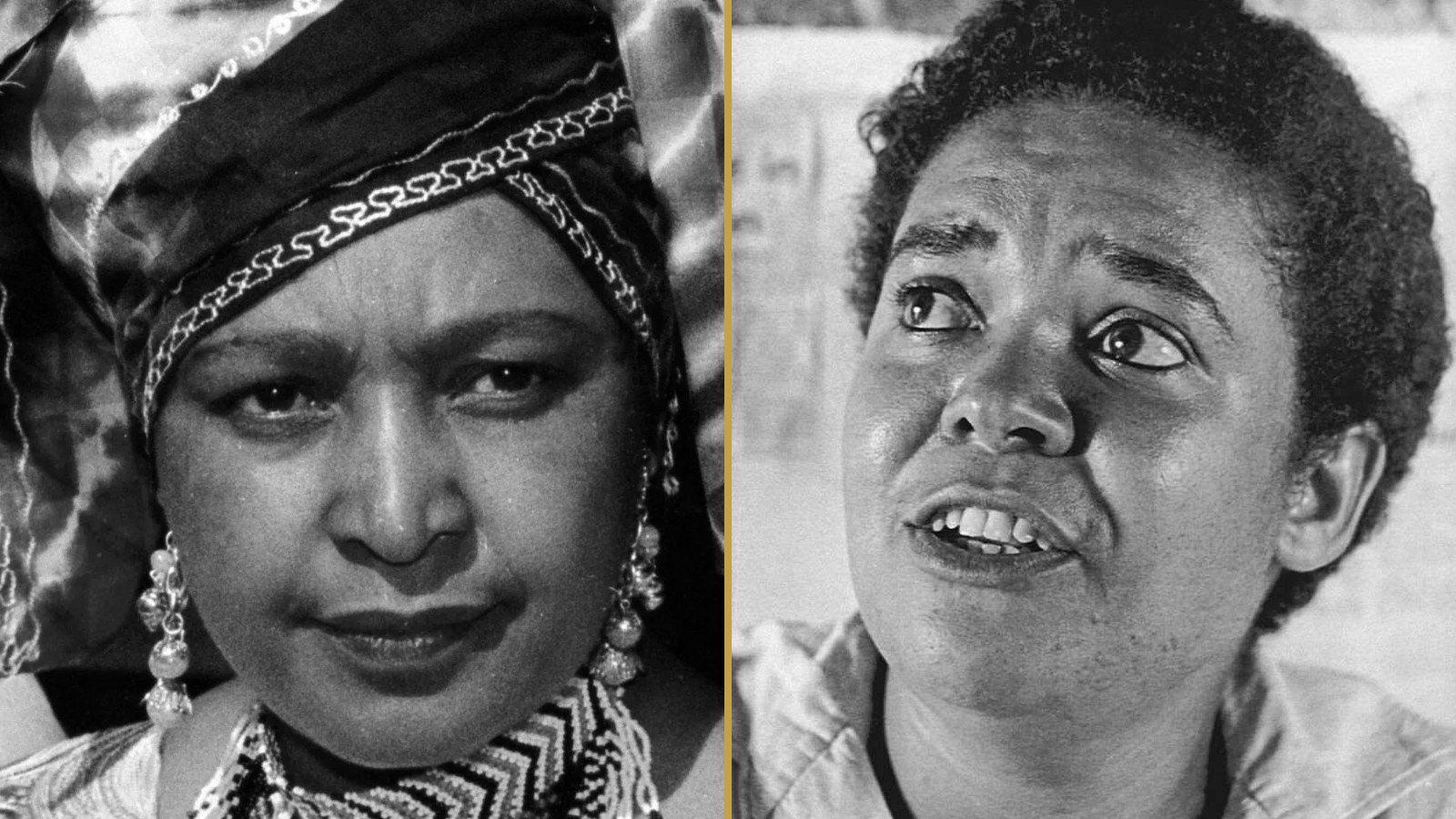
Two women, born one year apart in a country that had already decided what their lives would mean, spent the better part of their adult years being moved around, shut out, watched, and erased. The system did not succeed.
I write about them in April because this month holds both their deaths. Bessie Head died in Serowe on 17 April 1986. Winnie Madikizela-Mandela died in Johannesburg on 2 April 2018. Thirty-two years apart, the same month. April is, for this reason, a moment to take stock, not of what these women symbolised, but of what they actually did, and what it cost them.
The month of April has distinguished itself in our national calendar, not because it marks the arrival of the colonial invaders in 1652, led by Jan Van Riebeeck, but mostly because it marks historical moments that venerate our struggle – the execution of Solomon Mahlangu, whose death was a harbinger for the formation of COSAS and the Azanian Students Congress (AZASCO); the assassination of Chris Hani, whose death became a harbinger for the setting of the date of elections; the death of Oliver Tambo, a doyen of our struggle and the first democratic general elections were held in April.
Almost a century prior to the April 1994 general elections, the negotiations between the Brits and the Boers, following the conclusion of the South African War, the so-called Anglo-Boer War of 1899 – 1902, were formally opened on April 12, 1902, following the Boer decision in late March to explore a peace settlement. The final treaty was signed on May 31, 1902.
In this way therefore, and more, the month of April holds a special place in South Africa's long march from colonial invasion through to her political liberation, as we continue to march onward towards full, - what the ANC has over the years described as - genuine, emancipation.
Today, this month, we venerate two female doyens of the struggle, Mama Winnie Madikizela-Mandela as well as Mama Bessie Head. Their struggles are symptomatic of both the triple oppression suffered by black South African women (race discrimination, class oppression and gender discrimination), as well as the mammoth struggles they have had to wage to overcome these conditions.
BEFORE THE BANNING ORDERS, THERE WERE THE WOMEN THEMSELVES
Winnie Madikizela was born on 26 September 1936 in the village of eMbongweni, in the Bizana district of the Eastern Cape: a place of red soil, ancestral memory, and a tradition of resistance that would shape her entire political consciousness. She became, in 1955, South Africa's first Black female qualified social worker — appointed as a medical social worker at Baragwanath Hospital in Johannesburg, a credential that gave her a forensic, daily view of apartheid's mechanics: families dismembered by migrant labour policy, communities emptied by forced removals, children classified and reclassified by the racial bureaucracy. What the state encoded in law, she encountered in the lives of the people she worked with.
In a way, qualifying as the first Black female qualified social worker in 1955, during the year the Freedom Charter was adopted at the Congress of the People in Kliptown, Johannesburg, was in itself a vindication of letter and spirit of the Charter.
In 1957 she joined the African National Congress Women's League: the year before she married Nelson Mandela, confirming that her political commitment preceded the marriage rather than following from it. She was joining a tradition already in motion: one year earlier, in August 1956, twenty thousand women, many of them ANC Women's League members, had marched to the Union Buildings in Pretoria to protest the extension of pass laws to Black women, the largest act of organised women's resistance in South African history to that point. It was the kind of collective action that her professional life had already prepared her to understand. Within the League, she was active in anti-pass campaigns and community mobilisation — developing the precise organisational capacity that would, long before her husband's name made her publicly conspicuous, draw the attention of the Security Branch to her own activities.
Bessie Amelia Head was born on 6 July 1937 in the Pietermaritzburg Mental Hospital, an institution in which her mother, a white Scottish woman named Bessie Birch, had been committed precisely because she had fallen pregnant by a Black man. The apartheid state reached back, even into the circumstances of birth, to classify, to confine, to define. Head would later write that she had 'no country, no people, no tradition.' She had, instead, the page.
Neither woman sought the symbolic roles history would assign them. They were both, in their different registers, making pragmatic claims: on education, on craft, on the right to live without constant state interference in the texture of daily existence.
THE MACHINERY OF ERASURE
Winnie Madikizela-Mandela received her first banning order in 1962, her own ANC activism had already drawn the Security Branch's attention, and the arrest of her husband Nelson Mandela six months earlier provided the state with the pretext it needed to move against her directly. A banning order under the Suppression of Communism Act of 1950, as extended by the Internal Security Act, was a precise and brutal instrument: it prohibited the banned person from attending gatherings, from being quoted, from entering specified areas, from communicating with other banned persons. It effectively erased the individual from public life while leaving them physically present: a kind of living disappearance.
The machinery was calibrated. It was designed not merely to suppress political activity but to humiliate, to exhaust, to make ordinary life into an obstacle course. Winnie Madikizela-Mandela navigated this course for nearly three decades. When the first order expired, another replaced it. When she moved, the Security Branch followed. When she organised, her interlocutors were arrested.
Bessie Head faced a different but structurally analogous instrument: the exit permit. In 1964, under mounting pressure and surveillance — she had been involved with the Pan Africanist Congress, had been subjected to various forms of harassment, and found herself unable to function as a writer or a citizen: she left South Africa on an exit permit. An exit permit was a one-way document. It allowed the holder to leave; it did not allow them to return. South Africa was, for Head, legally sealed off.
She went to Botswana, then called Bechuanaland, with her infant son Howard, and settled eventually in the village of Serowe. She would live there for the rest of her life.
WHAT SOLITARY CONFINEMENT DOES TO A PERSON, AND WHAT THIS PARTICULAR PERSON DID TO SOLITARY CONFINEMENT
In May 1969, Winnie Madikizela-Mandela was detained under Section 6 of the Terrorism Act of 1967, a provision that allowed indefinite detention without charge, without access to a lawyer, without the procedural protections that even apartheid's courts notionally maintained for others. She was held in solitary confinement for 491 days.
Seventeen months. Alone.
The psychological intention of extended solitary confinement is documented: sensory deprivation, temporal disorientation, the dissolution of the self in the absence of human contact and social reference. The United Nations Standard Minimum Rules for the Treatment of Prisoners, the Nelson Mandela Rules, named with historical precision after a different member of the same household: now classify solitary confinement beyond fifteen consecutive days as cruel, inhuman, or degrading treatment. Winnie Madikizela-Mandela endured thirty-two times that duration.
What she produced, on the other side of that detention, was not diminishment but an intensification of moral clarity. She emerged more committed, more intentional, more visible, and, in the estimation of the security apparatus, more dangerous. This was not a triumph of ideology; it was a demonstration of what a specific kind of character, built across a specific kind of life, could withstand. Her resilience grew, not out of, but alongside her adversity.
In her memoir Part of My Soul (1985), she described what detention had actually produced: not destruction, but an unexpected clarity. Isolation had given her what the state could not take away: the space to think for herself, undistracted by the surveillance and restriction that surrounded her outside. What she recorded was not bravado. It was testimony.
For, in the end, as Paulo Freire opines in his book Pedagogy of the Oppressed, to seek our humanity is to see how it is being denied. Though we can be either dehumanised or humanised, our true purpose is the latter. Oppression crushes this purpose, but the fight against it keeps it alive. The oppressed, however, are often too afraid of the dangers of fighting back, even fearing their fellow oppressed who are scared of worse punishment. They learn that to be free, everyone must want and fight for freedom together.
To fight for freedom, the oppressed must first believe change is possible - that their oppression is a barrier to break, not a permanent cage. This belief is crucial but must lead to action. Simply understanding that the oppressor needs them to exist, as instruments for oppression and exploitation, is not liberation. Freedom is won only when this knowledge inspires them to join the struggle to overthrow their oppression.
The generation of Madikizela-Mandela and Bessie Head understood their historical mission that they had, through their own personal suffering and sacrifices, inspire the masses with the courage to join the struggle to overthrow their oppression. Those who took up the cudgels of the struggle understood the enormity of the sacrifices and suffering they had to endure, the immense prize they had to pay, because liberation would take more than individual heroic efforts, but would be a collective effort.
In his letter to Mama from Robben Island in 1969, cited in Thula Simpson's review article about the book Nelson Mandela: Conversations with Myself, Tata Madiba would say:
"For one thing those who have no soul, no sense of national pride and no ideals to win can suffer neither humiliation nor defeat; they can evolve no national heritage, are inspired by no sacred mission and can produce no martyrs or national heroes. A new world will be won not by those who stand at a distance with their arms folded, but by those who are in the arena, whose garments are torn by storms and whose bodies are maimed in the course of contest. Honour belongs to those who never forsake the truth even when things seem dark and grim, who try over and over again, who are never discouraged by insults, humiliation and even defeat. Since the dawn of history, mankind has honoured and respected brave and honest people, men and women like you darling – an ordinary girl who hails from a country village [not] shown in most maps, wife of a kraal which is the humblest even by peasant standards".
BANISHMENT AND THE POLITICS OF PLACE
In August 1977, the apartheid government banished Winnie Madikizela-Mandela from Soweto to the small Free State town of Brandfort, a place where she knew no one, where the local Sesotho dialect was unfamiliar to her, and where the Security Branch maintained continuous surveillance. Brandfort had a population of roughly two thousand Black residents, housed in a township called Phathakahle. There was no running water in the house to which she was assigned.
The name deserves more than a pause. Phathakahle is Zulu, and its meaning, in context, is not a general instruction about fragility. Phatha, in its relational use, means to look after, to receive, to care for: the way a community receives a guest, the way a host honours a visitor. Kahle means well, properly, in the right way. Sizokuphathakahle. We will look after you well. It is a communal promise. A vow of welcome. The township's name is not a warning about something breakable; it is a statement about how people will be received there.
The apartheid state sent its most ungovernable opponent to a place whose name, in Zulu, was an antithesis of what they intended. They sent her to Phathakahle not to be live in comfort but in utter discomfort among people she did not know and whose language she did not speak. They sent her to be isolated, to be cut from every network of solidarity and support. The community of Phathakahle received her (quietly, ordinarily, humanely) and that reception may be precisely what the state had not calculated.
However, unbeknown to the regime was a feisty spirit of resilience that resided in her, resonating in her own chest, inherited from her ancestors. Unbeknown to, and surely unwanted by, the regime was the fact that every oppressed people was her people; her struggle and theirs was one and they were in complete solidarity with her suffering, resilient spirit and struggle.
Instead, she built them a clinic and creche. She did not build the clinic and the creche despite Brandfort. She built them because of what she found there: a community that kept the promise its own name had made. The state's instrument of erasure had delivered her to people who had already decided, before she arrived, how they would hold whoever came to them. Sizokuphathakahle. We will look after you well. And then she turned it back on them, and looked after them in return.
The logic of banishment was geographic erasure. Remove the person from the networks that sustain them (family, community, political organisation) and the influence dissipates. The apartheid state applied this logic systematically: to political leaders, to activists, to teachers, to anyone whose capacity for organisation made them threatening.
What the logic did not account for was Winnie Mandela. The state's instrument of isolation delivered her to a community that received her rather than contained her, and she organised from within it, a node of resistance where the state had intended only absence. She refused the terms of her erasure.
She returned to Soweto in 1985, defying the terms of her banishment order after a petrol bomb attack on her Brandfort home. The government, by then, had lost the capacity to enforce her removal. She had outlasted the logic.
Bessie Head's form of banishment was statelessness. For fifteen years after her arrival in Botswana, she was a refugee: possessing no citizenship, no valid travel document, no right of return. She could not leave Botswana without risk of not being readmitted. She lived, in her own words, in 'a permanent state of apprehension.' She was granted Botswana citizenship in 1979. She was 42 years old.
THE INTERIOR EXILE, AND WHAT IT PRODUCED
Bessie Head's literary output, three novels, a collection of short stories, a social history of Serowe, and extensive correspondence, was produced almost entirely during the years of her statelessness. When Rain Clouds Gather was published in 1968, the year after her first application for citizenship was rejected. Maru followed in 1971, A Question of Power in 1974. Each work moves through questions of belonging, identity, the violence of racial classification, and the possibility of moral community in conditions of profound social fracture.
A Question of Power is, by common critical consensus, one of the most demanding works of African literature: a first-person account of psychological disintegration and reconstitution, set against the social landscape of Botswana and structured around questions of power, evil, and the self's capacity for renewal. It was written by a stateless person, in a country not her own, about a mind trying to find its ground.
Head died in Serowe on 17 April 1986, of hepatitis, aged 48. She was buried in the country that had finally become hers.
WHAT THE TRC RECORD REQUIRES US TO HOLD ALONGSIDE EVERYTHING ELSE
Bessie Head's story ends in Serowe, in the country that had finally claimed her, with a body of work that will outlast the conditions that produced it. Winnie Madikizela-Mandela's story does not end as cleanly. It requires something more from us.
Any honest account of Winnie Madikizela-Mandela must hold two things simultaneously: the documented record of extraordinary courage under conditions of extreme state violence, and the findings of the Truth and Reconciliation Commission regarding the actions of the Mandela United Football Club, which she led in the late 1980s, and which the TRC found responsible for killings, assaults, and kidnappings: including the abduction of fourteen-year-old Stompie Seipei Moeketsi in December 1988 and his subsequent murder in January 1989.
The TRC finding is not separate from the story of Winnie Madikizela-Mandela; it is part of it. A serious assessment of her political legacy requires that both the record of resistance and the record of harm be named and held in the same frame. The apartheid state bore primary responsibility for the conditions of moral degradation that its sustained violence against activists produced. That causal chain does not erase individual accountability. It contextualises it.
History is under no obligation to give us simple heroes. Winnie Madikizela-Mandela was not simple. Neither is the country she helped to make possible. Yet resonating in her life's story is resilience, defiance, path-finder, liberator and struggle shero; and this is the lasting memory of her that remains permanently etched in the minds of the ordinary masses who named their informal settlements and schools after her. They did so not as an act of resignation to the informality of their settlements, but of courage over their incumbent adversity and hope that they too, like her, will one day overcome that adversity and have their dignity restored. They hoped that their struggles would deliver a better future for their children.
But, again, what the TRC does not tell us is the extensive and brutal apartheid security machinations to tarnish her name and besmirch her legacy. The apartheid government's StratCom (Strategic Communications) was the regime's coordinated misinformation and disinformation machinery, communicating key messages and narratives to influence perceptions, behaviours, and decision-making of target audiences, both domestically and internationally, in support of national security and policy objectives.
A primary focus was discrediting key anti-apartheid figures, especially Winnie Madikizela-Mandela. Stratcom aggressively spread fabricated stories about her, without providing any evidence to back their claims, as well as amplifying her controversial statements and inventing tales of substance abuse. Similar tactics were used against others like Peter Mokaba, falsely labelling him an informant. The overarching strategy was to neutralise radical elements within the liberation movement and systematically diminish the ANC's moral stature to that of an ordinary political party.
Consequently, by the late 1980s, Stratcom had diligently worked to recast the future "Mother of the Nation" as a morally corrupt and potentially violent criminal. Important to note is the fact that while the National Party wanted South Africa and the world to believe that apartheid was all but over behind the scenes, Stratcom was only getting started. It is everybody's guess who else, post-apartheid, have been and still are the targets of the machinations of this illicit / covert grouping for neutralization and lies, and who works for and with it.
But as Paul Erasmus stated in his book Confessions of a Stratcom Hitman, the idea by FW De Klerk and his government was that "since the apartheid laws that propped up the Afrikaner elite for so long were no longer available, they needed to be reinvented as a front for their old faithfuls – the super-rich, white, right-wing funders".
Winnie Madikizela-Mandela died without ever having been exonerated by the Stratcom. Of course, no one should have expected that. She remained their enemy to the grave.
She died on 2 April 2018 in Johannesburg, aged 81. Tens of thousands packed Orlando Stadium in Soweto for her funeral: a state occasion attended by heads of government and ordinary South Africans in equal numbers.
What Winnie Madikizela-Mandela and Bessie Head share is not a common politics or a common aesthetic, but a common refusal: the refusal to accept the terms on which the state offered them their lives. Both women were offered a version of existence (controlled, contained, located in places and forms chosen by authority) and both declined it. The cost of that refusal was measured in years of displacement, isolation, surveillance, and loss.
As women, they stood tall as exemplars of not just freedom fighters, but also of the role of women in the struggle. Each one of them, together with millions of women that have participated in the struggle, saw, according to Olive Schreiner in his book Words in Season, that "the smallest change with regard to the position of woman in relation to man must entirely revolutionise society and modify the entire course of human existence on the globe".
The question that their lives put to the present is not a sentimental one about heroism. It is a structural one about what conditions a society must create and maintain to ensure that talent, courage, and moral intelligence, wherever they emerge and in whatever body they are housed, are not systematically destroyed before they can do their work.
South Africa has not yet fully answered that question. Neither has the continent. The women who are Winnie Madikizela-Mandela's and Bessie Head's inheritors — whose gifts are being managed, contained, or erased in quieter but structurally similar ways, are the measure by which the answer will be judged.
In the end, their greatest victory was not in their suffering or even in their ultimate death after years of heroic struggle, but in the fact that they stood tall among men, as part of humanity, and endured whatever fate life – oppression and the struggle for liberation – poured at them. Schreiner writes:
"When William the Silent, with his little band of Dutchmen, rose up to face the whole empire of Spain, I think there is no man who does not recognise that the hour of their greatest victory was not when they had conquered Spain, and hurled backward the greatest empire of the world to meet its slow, imperial death; it was the hour when that little band stood alone with the waters over their homes, facing death and despair, and stood facing it".
Long live the fighting memory of the Winnie Mandela and Bessie Head!
Long live the fighting memory of the Mothers of Our Nation!
“The future is not an accident.”
Dr Malusi Gigaba is a Scholar-Statesman, an ANC NEC Member, a former Cabinet Minister of the Republic of South Africa, a Member of Parliament, and a member of both the Joint Standing Committee on Defence and the Portfolio Committee on Trade, Industry and Competition.