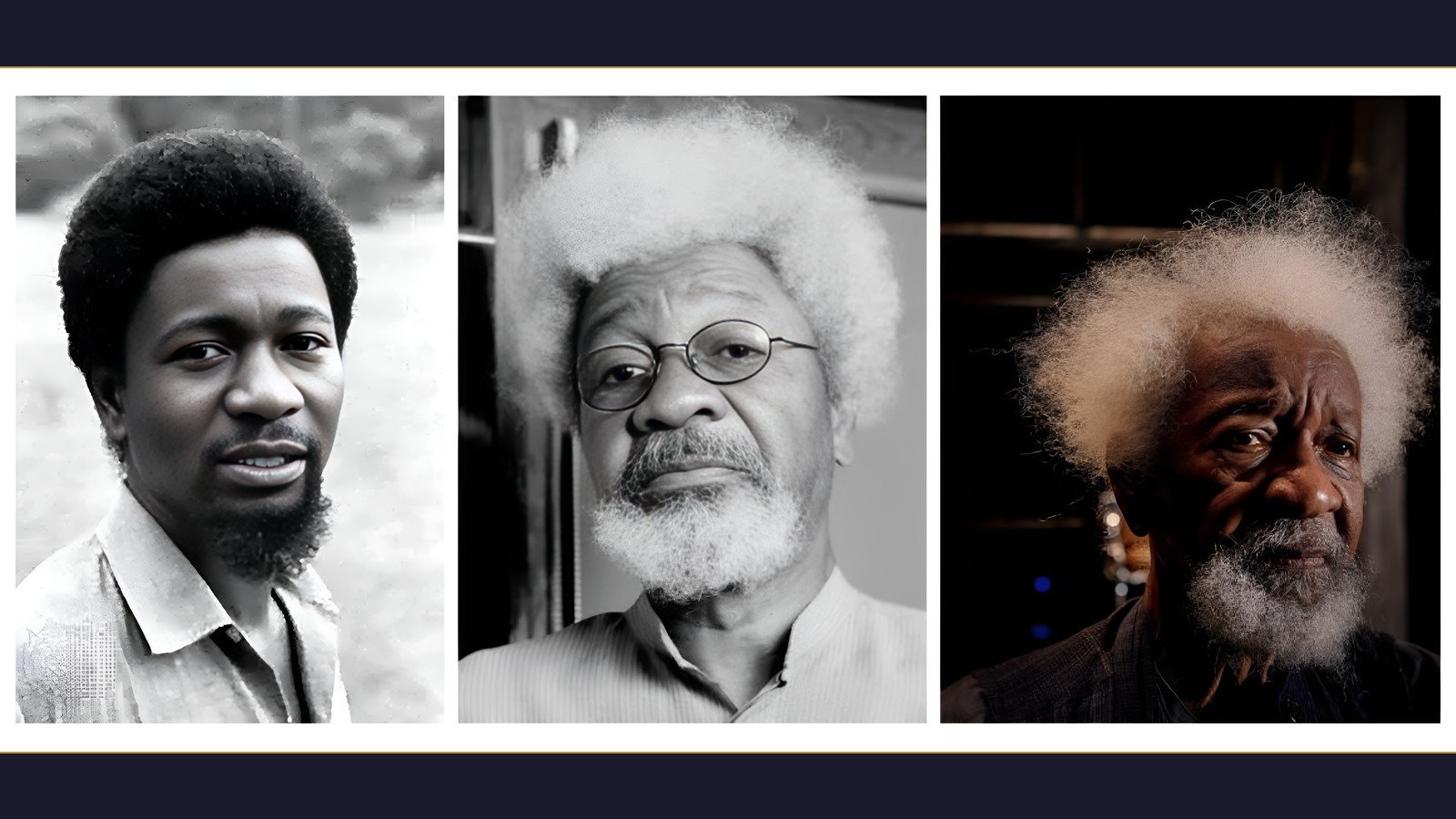
On 7 July 2019, in Niamey, the governments of Africa launched the operational phase of the African Continental Free Trade Area: the largest free-trade agreement the world has assembled since the founding of the World Trade Organisation. The African Union marked the date by declaring 7 July African Integration Day. Six days from now, on 13 July, Akinwande Oluwole Babatunde Soyinka turns ninety-two. The two facts are seldom spoken in the same breath. They belong together, because one names the integration we can measure and the other embodies the integration we keep forgetting to name.
A continent can sign a common market into being. It cannot sign a common imagination. The first is an achievement of negotiators and tariff schedules; the second is the patient work of writers, teachers, and readers, and it must come first, because people do not trade freely across borders they have never learned to see across. Soyinka is the most complete living proof of that older, harder, painstaking integration, a man who was continental before the treaties were, and who spent a lifetime insisting that Africa's unity would be a unity of meaning or it would not hold.
The day Africa named its own integration
African Integration Day is not a ceremonial decoration. It commemorates a concrete institutional act. The Agreement establishing the African Continental Free Trade Area had entered into force on 30 May 2019; five weeks later, at the Twelfth Extraordinary Session of the AU Assembly in Niamey, the heads of state and government launched its operational phase and designated 7 July as African Integration Day, an annual marker of the moment. The ambition attached to that date is not modest: a single market drawing together the membership of the Union, a population exceeding 1.2 billion people, and an aggregate gross domestic product above three trillion United States dollars: the largest free-trade area, by number of participating states, that the world has established since the WTO.
(Just in parenthesis, a GDP of this magnitude serves as living proof that gross domestic product alone is neither a sufficient nor a good measure of well-being, given it can and often does coexist with severe poverty and inequality.)
This is integration one can audit. Rules of origin, tariff phase-downs, trade corridors, dispute mechanisms, customs harmonisation: the machinery of a common market is visible, technical, and measurable. It is also, on its own, insufficient. A market is a set of agreements about goods. A union is a set of agreements about one another. A tariff schedule can tell a trader in Durban what it costs to sell into Lagos; it cannot tell that trader why Lagos should matter to him, or he to Lagos. The distance between the two is precisely the distance that culture, letters, and shared memory are asked to close, and no summit communiqué can close it for us.
The other integration, the one without a summit
There is a habit, in the way we discuss African unity, of speaking as though integration begins with economics and everything else follows. The historical record runs the other way. Before there was a free-trade area there was a Pan-African idea, and before there was a Pan-African idea there were African writers, musicians, and thinkers who refused to accept that the colonial map had settled the question of who belonged with whom. The imagination integrated first. The institutions are still catching up.
Adebajo traces Pan-African civil society activism to the eighteenth century, in the United States and the Caribbean, arising as a challenge to global anti-African racism. Early advocates like Blyden sympathised with Europe's “civilising mission,” but later figures like Williams and Du Bois opposed this, demanding an end to racism, and reparations and self-government. The 1945 Fifth Pan-African Congress shifted the movement's focus from the diaspora to Africa, dominated by African leaders. Pan-Africanism then became an ideology of newly independent governments, leading to competing visions: Nkrumah's call for an immediate continental union government — with a common market, a shared currency, a unified military command, and a single foreign policy: set against the gradualist Monrovia bloc, which favoured state sovereignty and looser cooperation. The OAU emerged as a compromise, committed to decolonisation and anti-apartheid, with strong diaspora support.1
One need only look at the European example so often cited in our integration debates: the common market that eventually became a union was preceded by centuries of shared letters, universities, and translation, a dense web of mutual recognition that made the later economic architecture thinkable. Africa's colonial history fractured much of that connective tissue, drawing borders that severed language from language and market from market. Repairing it is not nostalgia; it is infrastructure.
This matters for a practical reason, not only a sentimental one. Markets follow meaning. Citizens will accept the free movement of goods, capital, and eventually people across their borders only to the degree that they have already come to regard those on the other side as kin rather than strangers. That regard is manufactured in classrooms, on stages, between the covers of books: in the slow accumulation of a shared library. A continent that does not read itself will not, in the end, trust itself enough to trade as one. Cultural sovereignty is not a soft adjunct to the integration project. It is its foundation.
Ultimately, Steve Biko reminds us that “the most potent weapon in the hands of the oppressor is the mind of the oppressed.” Liberating our minds is a sine qua non to liberating ourselves as a people. Colonialism's greatest success was not just its laws, police, or army, but its ability to make African people believe they were inferior and were a disparate people divided along ethnic and/or national lines. The oppressor's primary weapon was the internalised self-doubt, dependency, and sense of powerlessness of the oppressed. That is partly why the ANC in 1969 emphasised the importance of fostering national confidence, pride, and assertiveness among the African people, not as a contradiction to internationalism, but instead as an enabler of genuine, equal cooperation free from dependency. The struggle for African independence had to be fundamentally an act of self-assertion by the African people, not a gift from the hitherto oppressor who had consigned us, and still by their extensive designs maintains us, in the lower rungs of the international division of labour. The “mainspring” of the revolution remains the awakened mind and confident spirit of the African nation.
A Nigerian who made himself a continent
Wole Soyinka was born on 13 July 1934 in Abeokuta, in western Nigeria, into the Yoruba world whose cosmology and cadence would run through everything he wrote. He studied at the University of Leeds and served his literary apprenticeship in London, working as a dramaturg at the Royal Court Theatre in the late 1950s. When Nigeria approached independence in 1960, it was Soyinka who was asked to write the play for the occasion — A Dance of the Forests, and he used the commission not to flatter the new nation but to warn it against romanticising its past. The gesture was characteristic. He would spend the next six decades declining to tell power what it wished to hear.
What made Soyinka a Pan-African figure rather than merely a Nigerian one was never a matter of passport or residence. It was the reach of the work itself. Across plays, poetry, novels and memoir — from the early comedy The Lion and the Jewel, through the political satire of Kongi's Harvest, to the childhood memoir Aké — he built a body of work that treated the whole texture of African life as material worthy of the first rank of world literature. In Death and the King's Horseman he took a specific episode of Yoruba ritual and colonial interference and made of it a meditation on duty, cosmos, and cultural violation that speaks wherever it is staged. He wrote a local world so completely that it became a universal one: which is the deepest form of integration a writer can perform, and the one no ministry can legislate. He belonged to Africa because Africa could recognise itself in what he made, and the world could recognise Africa in it too. In that way, therefore, he belonged to Africa as Africa belonged to him.
The prison and the price of conscience
Integration is not only celebration; it includes the courage to hold one's own house to account. Soyinka learned that at a cost. During the Nigerian civil war he appealed publicly for a ceasefire and sought to avert the slide into mass killing. For that he was arrested in 1967 and held as a political prisoner for twenty-two months, much of it in solitary confinement, until his release in 1969. He was jailed not for a foreign cause but for the crime of trying to stop his own country's war. Out of that confinement came The Man Died: The Prison Notes of Wole Soyinka, written in fragments on whatever paper he could reach, and one of its lines has outlived the regime that imprisoned him:
The man dies in all who keep silent in the face of tyranny.
Read carelessly, that sentence is only a rebuke to cowardice. Read carefully, it is a theory of memory, an argument that a people who allow their own history to be erased have already begun to die, and that the writer's vocation is to refuse the erasure. This is where the cultural argument and the integration argument meet. A shared African memory, honestly kept, is the substance out of which a shared African future is built. The writer who guards a nation's memory against forgetting is doing continental work, whether or not any treaty records it.
Stockholm, 1986: a Nigerian's platform, a South African's name
The clearest single act of African integration in Soyinka's life took place on a stage in Sweden. In 1986 he became the first African to be awarded the Nobel Prize in Literature. He might have used the occasion to speak of Nigeria, of Yoruba letters, of his own long road. Instead he delivered a lecture titled This Past Must Address Its Present, and he devoted it to Nelson Mandela, then still imprisoned and more than two decades into his sentence, turning the world's most prestigious literary platform into a sustained indictment of apartheid and of the racism that underwrote it. He forced the apartheid state's own justification for holding Mandela into the ear of the watching world:
When the whole world escalated its appeal for the release of Nelson Mandela, the South African Government blandly declared that it continued to hold Nelson Mandela for the same reasons that the Allied powers continued to hold Rudolf Hess.
To liken the man who would become South Africa's first democratic president to a Nazi war criminal was, Soyinka observed, “a macabre improvement” on the older habit of regarding him as sub-human. That a Nigerian would travel a hemisphere of politics and print to name that obscenity, on Mandela's behalf, is itself the act of integration this day exists to remember.
Consider what that was. A West African writer spent the highest honour his craft can bestow on the cause of a Southern African prisoner he had never met, in a country not his own, whose freedom was still years away. No trade protocol required it. No common market rewarded it. It was integration enacted as a moral reflex: thirty-three years before the delegates gathered in Niamey to sign what they called African integration into being. Soyinka understood, long before the economists formalised it, that the continent is a single moral space, and that an injury to the dignity of Africans anywhere is the business of Africans everywhere.
The point is worth holding still. We are accustomed to thinking of integration as something that flows from the top of the continent downward: from the summit to the protocol to the port. Soyinka's Stockholm lecture is a reminder that the most durable integration has usually run the other way, from the conscience of individual Africans outward, until the institutions had no choice but to catch up with what the writers and the exiles and the campaigners had already made true. The South Africa that would one day take its seat in the councils of a uniting Africa was, in 1986, a cause that a Nigerian was prepared to carry on a stage in Sweden. That is not a footnote to the integration story. It is the story's first chapter.
That is the lineage into which African Integration Day should be placed. The AfCFTA is the institutional expression of a solidarity that African artists and thinkers practised when it was dangerous and unrewarded. The treaty is downstream of the imagination. We should mark the treaty. We should never mistake it for the source.
What integration asks of those who governed
For South Africa, and for those of us who have held public office, the lesson is uncomfortable in the right way. It is possible to be a diligent participant in every integration mechanism the continent builds (the tariff schedules, the movement protocols, the harmonised standards) and still to have done nothing to integrate the imaginations of one's own citizens with those of the continent they are told they belong to. A generation that grows up inside the AfCFTA must also be a generation that reads across the continent it is now expected to trade with. Otherwise we will have built the market and neglected the union, and the market will not survive the neglect.
Those who have governed carry a particular version of this duty. The anxiety beneath the present moment in South Africa is not, in itself, illegitimate. The management of undocumented migration is a real responsibility of any capable state, and citizens are entitled to expect that their laws and their borders carry meaning. The tragedy is what that legitimate concern has been made to carry: a mobilisation in which the documented and the undocumented, the lawful resident and the asylum seeker, are blurred together until it is no longer irregular migration that stands accused but the African migrant as such. That is the point at which a reasonable concern curdles into a repudiation of the integration ideal, and no favourable trade figure can offset it. The instruments of the state (the school curriculum, the public broadcaster, the national library, the funding of the arts) are precisely the instruments by which a continent learns, or fails to learn, to read itself. To treat them as expendable is to defund the foundation on which every trade agreement finally rests. Soyinka at ninety-two is a standing reproach to the idea that culture is a luxury to be afforded after the serious economic work is done. In him, the culture is the serious work.
Africa will complete its integration when its markets are matched by its libraries; when a young South African encounters Soyinka as readily as a young Nigerian encounters our own writers; when the free movement of goods is accompanied by the free movement of stories. The treaties can open the borders. Only the shared imagination can make the crossing feel like coming home. That work has no summit and no signing ceremony. It is done one reader, one classroom, one act of welcome, one honestly kept memory at a time, and it is the work that remains.
When Soyinka won the Nobel in 1986, Chinua Achebe, long cast as his rival, hailed the award as a “stupendous display of energy and vitality” and judged him “most eminently deserving of any prize.”2 It was a fitting verdict on a life of rare range: dramatist, poet, novelist and social activist, but also connoisseur of fine wines, hunter of wild game, raconteur extraordinaire, film producer, and composer of caustic political songs. Soyinka's conviction that literature must be an activist literature has repeatedly placed him in political danger: most sharply when he fled Nigeria under General Sani Abacha, crossing to Benin by motorcycle for his pro-democracy stance. He has fearlessly named not only the West's culpability in the trans-Atlantic slave trade and colonisation, but equally the despots of every shade who have misgoverned the continent since independence: suffering enormously for convictions he has exercised on behalf of ordinary women and men who often cannot do so themselves.3
References
1 Adebajo, A. (ed.). 2020. The Pan-African Pantheon: Prophets, Poets, and Philosophers. Jacana Media: South Africa.
2 Chinua Achebe, welcoming Soyinka's 1986 Nobel Prize in Literature in his capacity as president of the Association of Nigerian Authors, as reported in the contemporary Nigerian press.
3 Osha, S. “Wole Soyinka: Ogun's Bard,” in Adebajo, A. (ed.). 2020. The Pan-African Pantheon: Prophets, Poets, and Philosophers. Jacana Media: South Africa.
“The future is not an accident.”
Dr Malusi Gigaba is a Scholar-Statesman, an ANC NEC Member, a former Cabinet Minister of the Republic of South Africa, a Member of Parliament, and a member of both the Joint Standing Committee on Defence and the Portfolio Committee on Trade, Industry and Competition.